

Benefits of Free Demos in Business
Discover the benefits of free demos for businesses and customers in India 🇮🇳. Learn how to gain value, avoid pitfalls, and enhance demo experiences with smart tips.
Edited By
Oliver Reed
Free demos have become a key tool for businesses aiming to present their products or services directly to customers with minimal risk. In markets like India, where buyers are often price-conscious and cautious about quality, giving a no-cost trial can nudge undecided prospects towards a purchase.
These demos work by allowing potential buyers to experience a product's features and benefits firsthand. For instance, software companies often offer free trial periods of their applications, while educational coaching institutes provide sample classes to highlight teaching quality. This hands-on approach builds trust, letting users verify claims themselves instead of relying solely on advertising.
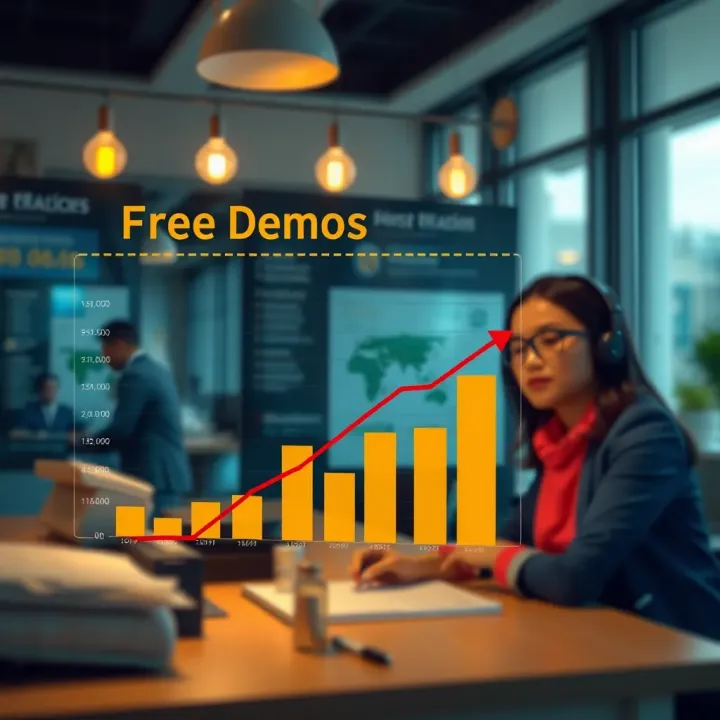
A well-executed free demo reduces the gap between scepticism and confidence, which can significantly boost conversion rates.
The advantages extend beyond customer confidence. From a supplier's perspective, demos serve as live marketing tools and valuable feedback channels. Providers can learn about user preferences, detect bugs or issues early, and refine offerings accordingly. In sectors such as financial advisory or stock trading platforms, free access to basic services or trial dashboards helps convert cautious investors into paying clients by demonstrating tangible value.
In the Indian context, free demos have particular relevance. With diverse customer segments spread across tier-1 to tier-3 cities, physical access to products is sometimes limited. Demos delivered digitally or through local outlets help bridge this gap. Plus, the festive season surge in retail often sees brands offering trial usage options or 'no cost EMI' schemes that act as demos in spirit.
Businesses using demos effectively tend to focus on:
Clarity: Simple, easy-to-understand demos tailored to common user pain points.
Accessibility: Ensuring the demo reaches the intended audience without hassle.
Follow-up: Engagement after demo consumption to address queries and close sales.
Understanding why and how free demos function will help traders, analysts, and investors appraise company strategies better. It also highlights practical steps businesses can take to design impactful demos, especially in a price-sensitive and quality-conscious Indian market.
This article explores all these facets, offering insights for stakeholders keen on leveraging free demos effectively.
Free demos act as firsthand previews of a product or service that businesses offer to potential customers. They give you a taste of what the full offering is like without requiring immediate commitment. For traders, advisors, and investors, understanding free demos is vital since it helps gauge the real-world value of tools or services before investing money. Especially in sectors like software or financial analysis platforms, a free demo can reveal critical features and usability aspects that marketing brochures might miss.
A free demo is essentially a trial experience provided by a company allowing users to interact with the product or service at no cost. This experience varies widely — from limited-time access to full-featured versions but with restrictions on use duration or functionalities. In finance-related businesses, for example, a brokerage platform might offer demo trading accounts where users can place virtual trades using simulated money. This helps them familiarise themselves with the interface and analytics without risking actual capital.
Live trial versions provide temporary, often full or nearly full access to a product. Software-as-a-Service (SaaS) firms like Zerodha or Upstox sometimes offer such trials for their analytics or trading platforms. Traders can explore tools such as charting, stock screening, and real-time data feeds. This hands-on approach lets users test the practical performance and stability, leading to informed decisions. Typically, these trials last from a few days to a month.
Interactive walkthroughs guide the user through the key features step by step, usually via a web interface or app. This format suits complex products where understanding workflows matters more than unrestricted access. For instance, a mutual fund advisory firm might provide an interactive demo of their portfolio recommendation engine, helping investors see how risk profiles affect asset allocation. It offers a structured, self-paced way to familiarise without overwhelming the user.
Some businesses offer demo versions that users can download, which include only partial features or limited data. In the context of financial software, a tool might allow users to analyse a small batch of stocks or produce sample reports. This format strikes a balance – users gain some insights without the costs of full access. Companies like NSE India often release limited datasets or sample reports to draw in analysts before they commit to subscriptions.
Accessing free demos is generally straightforward and widely digital now. Most firms promote them on their websites with simple sign-up forms requiring minimal personal details. Post-registration, customers may get online access immediately or through an email link. Additionally, Indian fintech startups often integrate demos with popular payment wallets or UPI apps to reduce friction. Physical retail sectors, however, might depend on in-store sampling or trial kiosks to showcase products firsthand.
Free demos provide a risk-free gateway to explore offerings, enabling informed decision-making that benefits both businesses and customers alike.
Free demos offer tangible benefits to both businesses and customers by bridging the gap between product promise and real experience. They allow companies to build rapport while enabling buyers to make informed choices.

Offering a free demo helps businesses establish trust early in the buyer’s journey. When customers get a hands-on look or trial version, it shows transparency and confidence in the product’s capabilities. For instance, software companies like Zoho or Freshworks often provide free SaaS trial periods, letting users test functionalities without commitment. This reduces hesitation and fosters confidence, especially when buyers see the product meets their needs practically, not just theoretically.
One common obstacle in client acquisition is the fear of making a wrong purchase. Free demos cut down this risk by giving users a chance to evaluate usability, features, and overall value firsthand. Take mobile apps or fintech platforms like Paytm Launchpad offering free trials before subscription; customers can decide based on direct experience rather than marketing claims. This trial phase often shortens the decision-making process and increases satisfaction post-purchase.
Free demos serve as a live testing ground for businesses. Users often provide honest feedback about strengths and flaws, which businesses can use to fine-tune products. For example, startups on marketplaces like IndiaMART collect demo user insights to better their offerings before full launch. Such iterative improvement enhances product-market fit and reduces costly mistakes.
Providing free demos isn’t just about product sampling; it’s a strategic marketing tool. Demos attract more potential customers, generating qualified leads eager to explore the product further. Amazon’s launch of new features often includes demo videos or interactive trials during festive sales, increasing visibility and conversion rates. Additionally, demos create word-of-mouth opportunities as satisfied testers share their experience within networks, further amplifying reach.
Offering free demos creates a win-win scenario where customers feel assured, and businesses gain direct access to engaged prospects, feedback, and sales growth.
In sum, free demos help reduce uncertainty, create trust, generate actionable feedback, and widen market reach — all crucial steps to growing successfully in India’s competitive business environment.
Free demos play an important role across various sectors, helping businesses showcase their offerings directly to potential customers. The impact of demos varies with the nature of products and services, making it crucial to tailor demo strategies according to the sector. Doing so can not only boost engagement but also improve purchase confidence and conversion rates.
In technology and software, free trials have become a standard practice to introduce users to new tools. For example, Software as a Service (SaaS) companies often provide time-limited trial periods so customers can explore essential features without upfront payment. This approach reduces buyer hesitation, allowing decision-makers to evaluate the software’s compatibility with their workflows. For instance, platforms like Freshworks and Zoho CRM offer 14 to 30-day trials that help Indian SMEs test usability before committing financially.
Mobile app demos are another effective way to attract users, especially in India where smartphone penetration is high. Demo versions or limited features allow users to experience core functionalities before downloading the full app or subscribing. This strategy works well for apps in categories like finance, education, and entertainment, where first impressions often determine retention. For example, paytm initially offered limited transaction options for free use, encouraging users to adopt its full digital wallet services.
Retail relies heavily on physical experiences, making free samples a popular tactic for food and beverages. Tasting sessions at supermarkets or local markets allow consumers to assess quality and taste, directly influencing purchase decisions. Brands like Amul and MTR frequently use sampling during festive seasons or product launches to build trust in new offerings.
Personal care and cosmetics companies also depend on free demos, often in the form of trial sachets or in-store testers. This helps consumers try products without risk, which is crucial in categories involving skin or hair care. For example, Lakmé and Biotique provide sample sachets during promotional campaigns, allowing customers to test efficacy before buying full-size products. This practice reduces hesitation, especially among budget-conscious Indian customers.
Education and training providers use free demos to showcase course quality and teaching methods. Online platforms like BYJU's and Unacademy offer sample lessons or free trials, helping learners gauge content relevance and instructional style before purchase. This is particularly useful given the variety of options available and the significant investment in time and money education requires. Offering demos also builds credibility and helps reduce dropout rates.
In summary, implementing free demos tailored to specific sectors can significantly improve user engagement and trust. Whether it's a trial period for software or a tasting session in retail, these demos lower buying barriers and provide valuable insights for continuous product improvement.
Offering sector-specific free demos helps businesses connect better with customers and drives informed buying decisions, especially in a diverse market like India.
Offering free demos provides significant advantages but also brings certain challenges that businesses must manage carefully. Understanding these limitations helps companies design better demo strategies and avoid pitfalls.
Free demos require investment in time, technology, and personnel. For example, maintaining servers to handle online software trials or staffing retail counters for product demonstrations in busy stores can quickly add up. In sectors like software-as-a-service (SaaS), enabling unlimited demo access risks incurring substantial operational costs without a guaranteed return. Businesses should estimate these expenses and balance demo availability with resource optimisation to avoid wastage.
Some users may exploit free demos without intent to convert, such as repeatedly re-registering for trial software or consuming product samples excessively. This misuse not only drains resources but can distort metrics that gauge demo success. Retailers often find customers who take multiple free samples without purchasing. Renting demo hardware without return or reselling demo products also poses risks. To minimise abuse, companies can impose usage limits, authentication checks, or track user behaviour closely.
A demo that fails to showcase a product’s key strengths can discourage potential buyers. For instance, limiting software demos too much might prevent users from experiencing critical features, leading to underwhelming impressions. On the other hand, overly generous demos could compromise security or intellectual property. Striking the right balance is vital—businesses should highlight the most compelling functionalities while retaining incentive for a full purchase.
Free demos might cannibalise sales if customers find the demo sufficient or choose to delay purchase, affecting cash flow and profits. In certain markets, too many demos can lower perceived product value, especially if the demo quality is poor. However, well-executed demos tend to drive conversions and long-term revenue growth. Careful monitoring of sales patterns after demo launches helps identify any negative impacts and adjust strategies accordingly.
Businesses need to see free demos not just as marketing tools but as investments requiring ongoing oversight to minimise costs and risks.
By addressing these challenges proactively, companies can use free demos effectively without undermining profitability or product reputation.
Free demos must be carefully designed and promoted to truly capture user interest and convert prospects into customers. Simply offering a demo is not enough; businesses have to ensure the demo communicates value, is easy to use, and ties into wider sales efforts. This section outlines practical steps that traders, analysts, advisers, investors, and brokers can follow to maximise the impact of free demos.
Transparency is key when presenting a free demo. Users should clearly understand what the demo includes and where its limitations lie. For example, a software company offering a trial might specify that certain premium features are locked or data is only saved temporarily. This prevents unrealistic expectations, reducing frustration and building trust. Clear communication can be done through concise product notes, demo guides, or onboarding emails. For Indian markets, highlighting any regional customisations or language options as part of the demo helps set the right tone.
The user experience (UX) of a demo can make or break conversion rates. A smooth, intuitive interface encourages users to explore and ultimately adopt the product. This means minimal steps to start, easy navigation, and responsive support channels like chatbots or helplines. For instance, banks in India often provide demo versions of mobile apps with guided walkthroughs that familiarise customers with digital banking features securely. Ensuring mobile compatibility is critical in India, where many users access demos via smartphones.
Collecting data on how users interact with demos can reveal bottlenecks and opportunities for improvement. Analytics tools track metrics like time spent, features accessed, and drop-off points. If investors notice that many users stop midway during a trial on a particular feature, the product team can revisit that feature's design or explanation. Integrating such analytics also helps tailor follow-up communications based on user activity, enabling more personalised sales pitches.
Demos should not operate in isolation but as part of a combined sales and marketing plan. For example, a brokerage firm may use free trading platform demos as a lead generation tool, linking sign-up data with customer relationship management (CRM) software to track potential clients. Marketing campaigns can highlight success stories or user testimonials to encourage demo sign-ups. Promotions through festival season sales or exclusive offers post-demo can nudge hesitant buyers. This integrated approach ensures demos contribute meaningfully to revenue generation.
A well-crafted demo is not just a trial; it’s a first interaction that can build lasting customer relationships and drive business growth.
Following these best practices helps businesses in India and beyond design free demos that not only attract but convert prospects efficiently, giving users confidence and clarity about their purchase decisions.
Free demos hold a strategic place in India’s diverse and rapidly evolving marketplace. They help businesses connect with a wide range of consumers, who often prefer to experience a product before committing financially. This is especially important given India’s price sensitivity and the strong desire to avoid risks in purchase decisions. For traders, analysts, and investors, recognising the impact of free demos on consumer behaviour can reveal valuable insights into market trends and product acceptance.
Indian consumers generally expect transparency and trustworthiness from brands. Many buyers hesitate before spending on unfamiliar products, so free demos act as a vital trust-building tool. For example, smartphone customers visiting retail stores in Bengaluru or Delhi often expect hands-on experiences to compare features and feel the product quality. Even in online shopping, platforms like Amazon India and Flipkart encourage trial experiences such as augmented reality demos or video previews. This hands-on approach helps customers make informed choices, reducing returns and boosting satisfaction.
Several Indian startups have leveraged free demos to establish themselves quickly. For instance, Razorpay introduced interactive demo accounts for its payment gateway services, allowing small businesses to explore transaction processes without financial commitment. In retail, companies like Nykaa offer sample-size products for personal care and cosmetics, enabling customers to test before bulk purchase. These strategies not only attract attention but also build loyalty in a competitive market. Understanding these examples highlights how free demos can support customer acquisition and retention.
Free demo strategies require fine-tuning for tier 2 and tier 3 cities, where internet access and consumer exposure vary significantly from metropolitan areas. Offline demos and in-person trials remain crucial here. Consider how Big Bazaar and local electronics stores organise product touch-and-try sessions to reach such markets effectively. Offering demos through regional languages and culturally relevant contexts also helps improve engagement. For digital products, lightweight or offline-compatible trial versions cater well to users with limited data or device capabilities.
Free demos tailored to the Indian context improve trust and decision-making, strengthen market penetration, and address diverse consumer needs across urban and smaller cities.
By focusing on authentic customer experience, demonstrating real value, and considering local conditions, businesses can use demos not just as marketing tools but as pillars of growth in India’s complex retail landscape.
Discover the benefits of free demos for businesses and customers in India 🇮🇳. Learn how to gain value, avoid pitfalls, and enhance demo experiences with smart tips.

Learn how the Quotex risk-free promo code works 🔑, eligibility criteria ✅, tips 📝 to maximize benefits, and avoid common risks for traders in India 🇮🇳.
Explore Qutex in depth: understand its definition, features, practical uses, benefits⭐ and applications across different fields📊 for smarter tech insights!
Explore how a Quotex partner earns through referrals 📈. Learn features, payment methods, tools & tips to boost income confidently in India 🇮🇳.
Based on 5 reviews