

Bitcoiva Exchange: Key Insights for Indian Crypto Traders
Explore Bitcoiva exchange for Indian crypto users 🚀—dive into its trading features, strong security, seamless compliance with local regulations, and reliable support.
Edited By
Liam Davies
Choosing the right cryptocurrency trading platform is a key step for investors and traders in India. With Delta Exchange and Binance standing out as major players, understanding their features, security, fees, and user experience helps you pick what fits your needs. While both platforms offer wide asset selections and advanced tools, their differences can influence your trading strategy and cost-effectiveness.
Delta Exchange focuses mainly on derivatives trading with futures and options on cryptocurrencies. It suits traders interested in leverage and hedging without dealing directly with spot assets. In contrast, Binance is a comprehensive marketplace offering spot trading, futures, savings products, and a larger ecosystem including NFTs, loans, and staking.
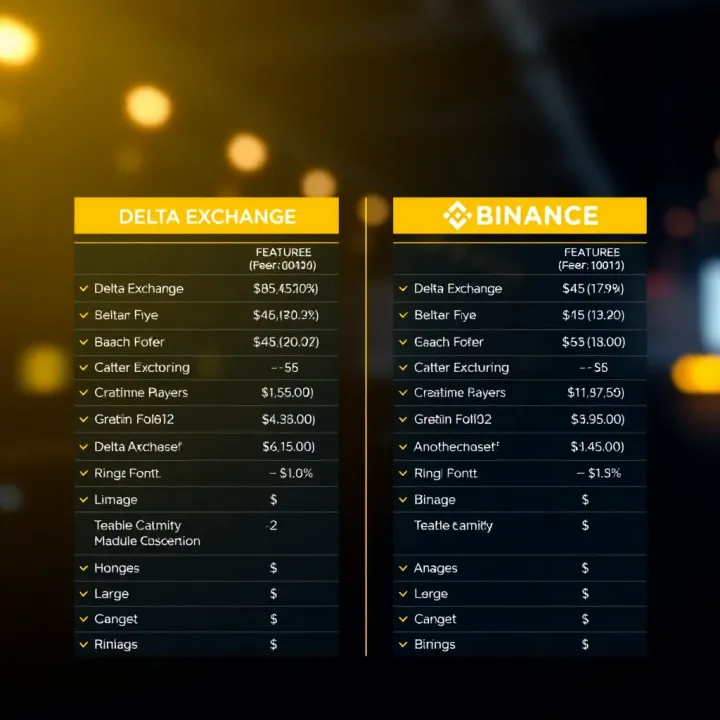
Security remains a major concern for Indian users. Binance has built a solid reputation with rigorous security protocols and insurance funds to cover user losses. Delta Exchange also emphasises security with cold wallet storage and two-factor authentication but maintains a smaller user base.
Fee structures vary notably. Binance charges competitive spot and futures fees, often reduced through its native BNB token discounts. Delta Exchange fees focus on contracts and can sometimes be higher for certain derivatives.
Indian traders should consider asset availability. Binance offers several hundred cryptocurrencies, including major coins and emerging tokens, making diversification easier. Delta Exchange’s portfolio is more narrow but targets popular derivative pairs.
Picking between these platforms depends on your trading style—active derivatives traders might lean towards Delta Exchange, while those wanting a broader crypto ecosystem and lower spot fees often prefer Binance.
This comparison will break down their offerings in detail to help you decide which platform suits your investment approach and comfort with risk, ensuring you trade confidently in the growing Indian crypto market.
Understanding the basics of Delta Exchange and Binance sets the stage for comparing these platforms effectively. Traders and investors must know their core offerings, operational focus, and market presence before zeroing in on features like fees, security, or supported cryptocurrencies. This overview clarifies what each platform specialises in, helping you decide which suits your trading style or investment preferences.
Delta Exchange is a relatively new but fast-growing cryptocurrency derivatives platform. It specialises primarily in futures and options trading across various digital assets. This focus makes it a good choice for traders looking to capitalise on price movements without necessarily holding the underlying assets. For example, Indian traders interested in leveraged contracts on popular coins like Bitcoin or Ethereum may find Delta’s margin trading attractive. Despite being newer, it offers an intuitive interface and competitive leverage, aiming especially at users who want to explore derivatives without excessive complexity.
Binance is one of the world’s largest and most established cryptocurrency exchanges. Its product range spans spot trading, futures, options, savings, staking, and even NFT marketplaces. Binance supports hundreds of cryptocurrencies and trading pairs, making it a one-stop platform for beginners as well as seasoned investors. Indian users benefit from features like INR deposits, multiple payment options, and comprehensive educational content. Since Binance operates globally with a strong regulatory framework, it typically appeals to traders seeking security and a wide asset base.
Delta Exchange appeals primarily to traders with a moderate to high risk appetite focused on derivatives and margin trading. It positions itself as a niche player offering specialised contracts and a simplified user journey for futures and options. For instance, a trader looking to hedge or speculate might prefer Delta’s straightforward offerings without the noise of an extensive spot market.
On the other hand, Binance targets a broader audience, ranging from fresh investors making their first crypto purchase to professionals managing diverse portfolios. Its expansive market presence allows access to multiple trading instruments and assets on one platform, making it well-suited for users wanting all-in-one solutions. Binance’s localised services, including INR support and regular promos for Indian festivals, boost its appeal in India’s rapidly growing crypto market.
Choosing between Delta Exchange and Binance depends on whether you prioritise specialised derivatives trading or a more comprehensive crypto ecosystem with diverse assets and services.
By understanding these foundational differences, Indian traders and investors can better assess which platform aligns with their financial goals and trading style.
Trading features and instruments form the backbone of any cryptocurrency platform. For traders and investors, the range and flexibility of these tools often determine how effectively they can manage risk, capitalise on market movements, and diversify portfolios. Both Delta Exchange and Binance offer multiple options, but the specifics differ significantly, affecting the user’s trading style and preferences.
Spot trading lets you buy or sell cryptocurrencies instantly at current market prices. Binance excels here with a vast selection of tokens and highly liquid markets. This suits traders who prefer straightforward buying and selling without complexity. Delta Exchange, on the other hand, focuses more on derivatives — mainly futures and options contracts on various crypto assets and indexes. These let traders speculate on prices without holding the actual coins, useful for hedging or leveraged bets.
For example, if you want to trade Bitcoin instantly, Binance offers robust spot liquidity. But if you’d rather hedge risk or speculate on price direction without owning Bitcoin outright, Delta Exchange’s futures contracts might fit better. Indian traders eyeing advanced strategies often favour derivative platforms for the added flexibility.
Leverage amplifies your exposure using borrowed funds, which can boost profits and losses both. Binance provides leverage up to 20x on many pairs, while Delta Exchange can go higher, sometimes up to 100x on certain contracts. However, higher leverage means higher risk, so it suits experienced traders.
Margin trading is supported on both, but the terms differ. Binance allows cross and isolated margin modes with adjustable collateral, providing risk control options. Delta Exchange’s margin trading naturally ties into its derivatives, requiring you to maintain margin levels or face liquidation.
For example, a trader placing a ₹50,000 position with 10x leverage on Binance needs ₹5,000 margin. On Delta Exchange, that number might be smaller if leverage is higher, but liquidation risk rises sharply if the market moves unfavourably.
Order variety is critical for efficient trading. Binance features a broad range including market, limit, stop-limit, stop-market, trailing stop, and iceberg orders. These tools allow traders to automate exit points, manage entry prices, and reduce slippage.
Delta Exchange also offers similar order types but with more emphasis on advanced derivative orders like calendar spreads or bracket orders, popular among seasoned traders.
Both platforms provide charting tools integrated with indicators like RSI and MACD, plus real-time market data. Binance’s interface is richer with social and copy-trading options, while Delta Exchange keeps it trader-focused with deep analytics for derivative markets.
For Indian traders, choosing between Delta Exchange’s derivative-focused approach and Binance’s extensive spot market depends on their risk appetite, trading goals, and preference for simple buy-sell versus complex strategies.
In sum, Delta Exchange suits those who want to actively trade futures, options, and leverage up to higher levels, while Binance caters to users seeking broad token exposure, easy spot trades, and comprehensive order options under one roof.
User experience (UX) and accessibility play a significant role in choosing a crypto trading platform, especially for Indian traders juggling various devices and varying internet speeds. A platform that is intuitive and accessible can save both time and effort, leading to faster decision-making and potentially better trading outcomes. These factors include how easy it is to navigate the interface, the quality of the mobile app, and the availability of responsive customer support and educational content.
A clean, well-organised interface reduces the learning curve, making it easier for users to execute trades without confusion. Binance offers a detailed yet user-friendly layout with dashboards showcasing market trends, portfolio status, and quick access to trading pairs. This can appeal to seasoned traders who need advanced charting tools but also to new users who appreciate having clear navigation.
Delta Exchange focuses on simplicity, with a minimalist interface that puts derivatives trading front and centre. This suits traders who are mainly interested in futures and options without distractions from secondary services. However, beginners might find it less accommodating compared to Binance’s richer ecosystem.
Given that many Indian traders prefer trading on mobile during commutes or breaks, the app’s stability and responsiveness matter. Binance’s mobile app is highly rated for its smooth performance, multiple language support including Hindi and Tamil, and features like fingerprint login, real-time notifications, and quick deposit options.
Delta Exchange’s app is robust but less polished; it focuses heavily on derivatives with features like leverage control and liquidation alerts. While it covers essentials well, its fewer language options and slightly slower updates might matter for users seeking a broader user experience.
On the web front, both platforms offer responsive websites. Binance provides a rich set of tools including advanced charts from TradingView directly embedded, whereas Delta Exchange offers a straightforward, focused web platform primarily suited for derivatives traders.
Efficient customer support can prevent losses when quick solutions are needed. Binance operates a 24/7 multilingual support system including live chat, email, and an extensive FAQ section tailored for Indian users. They also offer guides and webinars covering trading basics, risk management, and coin analysis—great for freshers and experts alike.
In comparison, Delta Exchange offers email support and a ticketing system with reasonable response times but lacks live chat. Their educational resources mostly target derivatives trading with webinars and detailed explainer articles but are not as extensive as Binance’s.
A platform's usability and support can strongly influence your trading success, especially when market conditions shift rapidly. Picking a platform that aligns with your trading style and comfort with technology is key.
In summary, Binance offers a more rounded user experience with extensive tools, language support, and educational materials, making it suitable for a wide range of traders. Delta Exchange, while streamlined for derivatives, may meet the needs of traders focused on futures and options who prefer a less cluttered experience.
Security and regulatory compliance are fundamental when choosing a cryptocurrency trading platform. Traders and investors must ensure their assets and personal data are protected, especially in a market prone to hacking incidents and fraud. At the same time, compliance with legal regulations, particularly in countries like India where crypto regulations are evolving, safeguards users from future legal uncertainties.
Both Delta Exchange and Binance prioritise user safety but with varying approaches. Delta Exchange employs multi-layered security protocols, including two-factor authentication (2FA), cold storage for most digital assets, and regular security audits to minimise risks. For example, a significant portion of users’ funds remain offline in cold wallets, reducing vulnerability to hacking. Binance also offers robust security, with measures like 2FA, device management, and a Secure Asset Fund for Users (SAFU) that acts as an emergency insurance in case of breaches. Binance has faced past security incidents but compensated affected users through SAFU, demonstrating commitment to user protection.
User education on security practices is another critical feature. Binance provides detailed guides and alerts on phishing, while Delta Exchange sends real-time notifications on account activities to alert users of suspicious behaviour. For Indian users, such proactive steps are vital given the rising number of cyber threats and fraudulent schemes targeting crypto holders.
Navigating the legal landscape for cryptocurrency is especially relevant for Indian investors due to ongoing regulatory flux. Binance operates globally with compliance checks in several jurisdictions, but in India, the platform is not officially licensed or regulated, existing in a grey area. Users should be aware that the Reserve Bank of India (RBI) has not explicitly authorised crypto exchanges but also does not ban them outright. SEBI (Securities and Exchange Board of India) continues to monitor and may introduce stricter rules soon.
Delta Exchange, being more regional-focused, follows best practices for compliance but likewise does not hold a specific Indian licence. Transactions within these platforms adhere to Anti-Money Laundering (AML) and Know Your Customer (KYC) norms, which align with Indian financial regulations to a degree. However, users must keep track of changes in taxation such as the recent 30% crypto gains tax and 1% TDS on transfers.
It’s wise for Indian crypto traders to keep a close watch on evolving regulations and opt for platforms that prioritise transparency and adhere to international security standards.
In summary, while both Delta Exchange and Binance implement strong safety protocols and comply with general international laws, their regulatory status in India is not fully concrete. Traders should weigh security features and legal risks carefully before committing significant funds.
When choosing a cryptocurrency platform, understanding the fee structure and payment options is vital. These factors directly impact your trading costs and ease of fund transfers, both of which can affect profitability and convenience especially for Indian traders dealing in volatile markets.
Delta Exchange and Binance have different fee models that influence how much you pay per trade. Binance typically charges a standard trading fee of 0.1% per transaction, which can reduce further to 0.075% if you use Binance Coin (BNB) to pay fees. This discount mechanism offers tangible savings for active traders. In contrast, Delta Exchange prices can vary between 0.04% to 0.1% depending on the contract type and user’s trading volume, making it attractive for high-frequency traders.
Withdrawals come with their own charges. Binance’s withdrawal fee depends on the cryptocurrency, for example, it charges 0.0005 BTC for Bitcoin withdrawals. Delta Exchange usually sets withdrawal fees as a fixed amount per asset or as a percentage, sometimes including network charges. Indian users need to consider these fees closely because withdrawal costs, compounded with trading fees, can add up if you're transferring funds regularly.
Payment options also matter. Binance supports multiple deposit methods including UPI transfers via third-party payment gateways, which is handy for Indian traders wanting quick rupee-to-crypto conversions. It also accepts fiat deposits in INR, USD, and several other major currencies, making it flexible for those who trade in multiple currencies.
Delta Exchange, meanwhile, does not directly accept fiat deposits. Users usually fund their accounts with cryptocurrencies sent from wallets or other exchanges. This approach might delay trade start times for Indian users who first need to convert INR to crypto elsewhere.
For Indian traders, a platform supporting INR deposits and affordable withdrawal fees often means smoother and cheaper trading experiences.
Both platforms provide options for popular cryptocurrencies like Bitcoin, Ethereum and Ripple for deposits and withdrawals, but Binance’s support for fiat payment options and reduced trading fees with BNB use gives it an edge for traders focusing on cost efficiency and quick fund access.
Choosing between them depends on your trading volume, how often you move money in and out, and your comfort with using crypto wallets to fund trades. Keeping an eye on fee updates and payment facility changes is also crucial to avoid surprises.
When choosing a crypto trading platform, the selection of supported cryptocurrencies and extra features can significantly impact your trading strategies and investment portfolio. Both Delta Exchange and Binance offer various assets and services, but their scope and depth differ enough to influence which suits your needs better.
Binance stands out with an extensive catalogue of cryptocurrencies, featuring over 600 coins and tokens. This includes well-known coins like Bitcoin (BTC), Ethereum (ETH), and Ripple (XRP), as well as emerging altcoins such as Polygon (MATIC) and Solana (SOL). For Indian traders keen on diversification or exploring niche tokens, Binance’s broad asset pool offers ample opportunity.
On the other hand, Delta Exchange focuses more on derivatives and futures with selected cryptocurrencies, listing around 50 coins including major tokens and some DeFi (decentralised finance) assets. Though smaller in quantity compared to Binance, the tokens available are often paired with futures contracts or options, which suits traders favouring leveraged bets and hedging.
Having many tokens is useful only if you actively trade or invest in them. For example, if your interest lies in spot trading multiple lesser-known coins, Binance gives more trading pairs and liquidity. Meanwhile, if you primarily engage in futures for a few major coins, Delta Exchange’s focused offerings may work better.
Beyond just the assets, platforms provide extra tools and collaborations that enhance trading utility. Binance offers services like Binance Staking, where users can earn passive income by locking tokens, and Binance Launchpad for participating in new token offerings. They have also tied up with payment providers in India such as Razorpay for easier deposits.
Delta Exchange delivers value mainly through innovative derivatives products and a robust API for automated trading. Its partnerships often revolve around blockchain projects that offer unique trading contracts, such as perpetual futures for cryptocurrencies rarely found elsewhere. This specialised approach appeals to sophisticated traders looking for unique market exposure.
Understanding not only which cryptocurrencies you can trade but also the additional features a platform provides will help you choose the exchange that aligns with your trading style and goals.
For Indian traders, selecting between Delta Exchange and Binance boils down to whether you prioritise breadth in token availability with associated services or prefer concentrated derivative products complemented by advanced trading tools. Both platforms bring solid options; the right choice depends on how you intend to build or hedge your portfolio.
Choosing between Delta Exchange and Binance depends heavily on what kind of cryptocurrency trader you are and your priorities. Both platforms have distinct strengths that cater to different user needs, especially for Indian users looking to balance features, security, and costs.
Delta Exchange shines for traders focused on derivatives and futures trading. Its user interface is fairly straightforward, especially for people who prefer a clean, focused trading environment. The platform supports multiple trading pairs with good leverage options, appealing to more experienced traders who want flexibility in margin trading. On the downside, Delta has fewer cryptocurrencies compared to Binance, limiting options if you want to explore a wide range of digital assets.
Binance, on the other hand, is a powerhouse with an extensive list of supported cryptocurrencies — thousands of tokens including newer projects. Its ecosystem includes spot trading, futures, staking, and even NFT marketplaces, offering a broad canvas for both casual and advanced users. User experience is polished, with mobile and web platforms designed for responsiveness. However, Binance can overwhelm beginners with its vast features and may come with higher withdrawal fees for some coins. Indian users should also watch regulatory updates regularly since Binance’s legal situation is evolving.
If you are a trader aiming mainly for derivatives with moderate variety in token options, Delta Exchange could serve you better due to its niche focus and competitive fees on futures contracts. It works well for those who want simplicity without sacrificing advanced trading tools like leverage and stop-loss orders.
However, if you are looking for a one-stop crypto hub with a rich selection of coins, spot and derivatives trading, and additional services like staking or savings, Binance has the edge. Investors who want to diversify across tokens and explore newer crypto projects will find Binance's platform more versatile.
For Indian traders, check your comfort with handling complex interfaces and stay updated on regulatory changes, especially for Binance users. Keep an eye on withdrawal and trading fees which can impact profitability.
In summary, pick Delta Exchange for focused derivatives trading with straightforward tools, and Binance if you want a comprehensive crypto experience with a wide range of assets. Your choice should match your trading style, risk tolerance, and how much you value features beyond standard trading.
This section helps you decide not just based on features, but practical trading preferences and regional realities, saving time and effort in choosing a platform that fits your crypto goals best.
Explore Bitcoiva exchange for Indian crypto users 🚀—dive into its trading features, strong security, seamless compliance with local regulations, and reliable support.

📈 Discover how to pick a real trading platform in India ✅ Learn key features, security tips, regulations, and tools to trade smart and safe!

Explore the Quotex website in detail 📊! Learn about account setup, trading options, platform tools, security, and support to trade confidently in India 🇮🇳.

Explore Quotex.com demo for Indian traders 🇮🇳. Learn how to register, use key features, and practice trading efficiently before going live 📈.
Based on 5 reviews