
Understanding Range Markets in Trading
📈 Learn to spot and trade range markets smartly! Understand key traits, tools, and strategies, plus how these differ from trending markets for savvy trading.
Edited By
Amelia Foster
The DAX index is a major barometer of Germany’s corporate health and one of the leading stock indices in Europe. It tracks the performance of 40 of the largest and most liquid German companies listed on the Frankfurt Stock Exchange. For investors and financial analysts, understanding how the DAX functions is key to gauging economic trends not just within Germany but across the continent.
The index itself uses a market capitalisation-weighted methodology, which means companies with higher market value have a larger impact on the DAX’s movement. This setup gives a clear picture of how heavyweight firms like Siemens, Volkswagen, and Bayer sway the overall market sentiment.
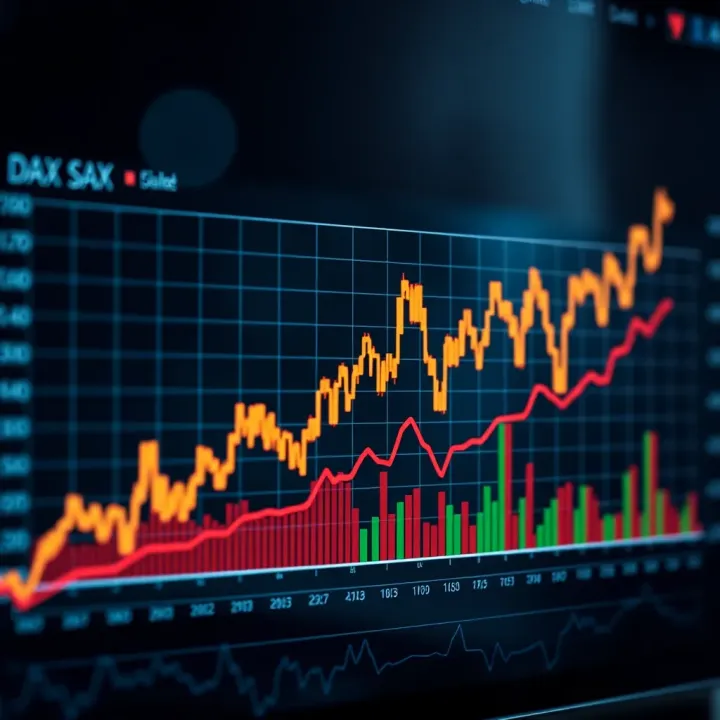
The DAX index represents a real-time snapshot of Germany's economic shifts, making it a crucial tool for traders and advisors who want to stay ahead of market swings.
Composition: Consists of 40 blue-chip German companies from various sectors like automotive, chemicals, technology, and finance.
Weighting: Market-capitalisation based, adjusted for free float. This keeps the index aligned with the actual investable market.
Calculation: Updated every second during trading hours to reflect price changes accurately.
Understanding the DAX’s operation helps Indian investors spot opportunities and risks linked with the Indian stock market’s exposure to European trade relations and currency fluctuations. For example, during the Eurozone crisis, the DAX volatility directly influenced Indian IT and pharma stocks that have a significant export component to Europe.
Trading the DAX often involves futures and exchange-traded funds (ETFs), which gives Indian traders exposure to European equities without the need for cross-border investments. Knowledge of the index’s fluctuations also guides portfolio diversification decisions, especially when global markets exhibit volatility.
By keeping a close eye on economic indicators such as German GDP growth, industrial output, and euro strength, one can anticipate possible movements in the DAX. This insight can be valuable for investors looking to time their trades or rebalance holdings that include international assets.
With growing integration of markets and trade, the DAX index reflects more than just Germany’s economy—it conveys signals that resonate across global financial corridors, including India’s markets. This makes it an essential part of financial analysis and decision-making for traders, investors, and advisors alike.
Understanding the DAX Index is fundamental for anyone looking to grasp European financial markets, especially traders, analysts, and investors focusing on global diversification. This section introduces the DAX’s structure and significance, laying groundwork for deeper analysis. Knowing what the DAX represents and how it came to be helps decode market movements that influence economies far beyond Germany.
The DAX Index consists of 40 major German blue-chip companies listed on the Frankfurt Stock Exchange. These firms span across critical sectors such as automotive, chemicals, banking, and technology. For example, household names like Volkswagen, Siemens, and Deutsche Bank form part of the DAX, highlighting the industrial strength and global reach of the German economy. This composition makes the DAX a solid indicator of the overall business climate in Germany and, by extension, the Eurozone.
Investors follow the DAX closely because it reflects the performance of Germany’s largest publicly traded companies. For instance, when Siemens reports strong quarterly earnings, the DAX often sees positive movement, signalling investor confidence. This direct link between company success and the index helps market participants interpret economic health and strategise their portfolios accordingly.
Companies qualify for the DAX based on free-float market capitalisation and order book turnover on the Frankfurt Stock Exchange. Simply put, companies must have a significant market value that’s readily tradable and sufficiently active turnover to be included. This ensures the index remains liquid and a reliable market proxy.
In practical terms, this means smaller firms or those with low trading volume won’t make the cut, keeping the DAX representative of influential market players. For Indian investors or brokers considering index-tracking products, this criteria guarantees exposure to stable, sizeable companies rather than volatile or illiquid stocks.
The DAX index was launched in 1988 as a way to track the performance of Germany's top companies and provide a transparent measure of the German equity market. Unlike some older indices, which started in the early 20th century, the DAX was created with modern market dynamics in mind, reflecting post-reunification Germany’s rapid economic development.
Its inception helped establish Germany as a key player in European financial markets. Before 1988, German stock performance was fragmented across various smaller indices, making it difficult for investors—both local and international—to gauge market trends accurately.
Initially comprising 30 companies, the DAX expanded to 40 firms in September 2021. This change was driven by the need to better capture the breadth of Germany’s corporate landscape and improve diversification. Including more companies also reduced concentration risk from the largest constituents.
Other significant updates include adjustments to the calculation methodology to consider free-float shares rather than total shares, aligning with global index standards. Corporate actions, such as mergers or delistings, are regularly accounted for, keeping the index relevant and reflective of current market conditions.
The DAX’s evolution illustrates how an index must adapt to changing economic landscapes and investor demands, making it a dynamic benchmark rather than a static list.
This historical background clarifies why the DAX remains a trusted barometer for German economic health and a crucial tool for investors worldwide.
Understanding how the DAX index works is vital for traders, analysts, and investors aiming to navigate its movements effectively. The index's structure and operational mechanics influence how its value reacts to market conditions and corporate activities. This chapter explains the calculation approach of the DAX and how its trading schedule and platforms impact market participation.
The DAX operates on a market-capitalisation weighting system rather than a price-weighted system. This means companies with larger market values have a bigger influence on the index’s performance. For example, Volkswagen, with a higher market capitalisation, impacts the DAX more than a smaller company like Covestro, even if Covestro's share price changes significantly. This system reflects the real economic weight of companies, which traders find useful for assessing the overall German economy’s health.
Price-weighted indices, like the Dow Jones Industrial Average, give more weight to higher-priced stocks regardless of the company size, which can sometimes distort true market performance. By contrast, the DAX’s market-cap method ensures that shifts in major companies’ valuations have appropriate influence on the index.
Adjustments are made in the DAX for dividends and corporate actions such as stock splits or mergers. These adjustments keep the index stable and comparable over time, preventing sudden artificial jumps or drops. For instance, when Siemens pays dividends, the index calculation accounts for this payout to avoid skewing the performance metrics. Similarly, if a company involved in the DAX undergoes a stock split, the stock price is recalibrated so that the index value remains consistent.
Such adjustments mean that investors and analysts watching the DAX get a clear picture of real price and value changes, rather than fluctuations caused by corporate restructuring or dividends.
The DAX is primarily traded on the Frankfurt Stock Exchange, with official trading hours from 9:00 am to 5:30 pm Central European Time (CET). For Indian investors, this corresponds roughly to 1:30 pm to 8:00 pm Indian Standard Time (IST). Understanding this schedule helps traders plan their activities and manage orders efficiently, especially when dealing with market openings and closings.
Besides the spot market trading on the Frankfurt Exchange, the DAX is linked to various derivatives platforms that offer futures and options contracts. Popular international exchanges like Eurex provide these derivatives, which allow investors to speculate or hedge risks related to the DAX without directly buying all constituent stocks. These instruments are especially handy for Indian traders who want exposure to the German market but prefer handling smaller lot sizes or using leverage.
Being familiar with the DAX’s trading hours and associated platforms lets investors and advisors time their decisions better and explore multiple ways to access the German market.
In summary, understanding the DAX’s calculation and trading ecosystem helps market participants interpret index movements accurately and execute strategies that suit their risk profiles and investment goals.
The DAX index serves as a key indicator of Germany's economic health due to the country's role as Europe's largest economy. Since the index tracks the top 40 German companies, its performance often reflects real-time business conditions in sectors ranging from automotive to industrial manufacturing. For instance, a sharp drop in the DAX might signal weakening exports or manufacturing slowdowns, which can alert investors and policymakers to potential economic risks.
Moreover, German companies like Siemens, Volkswagen, and SAP play significant roles beyond Germany's borders, making the DAX a barometer not just for national but also regional economic trends. Changes in the index often provide early clues about Europe's wider economic trajectory, influencing decisions by central banks, investors, and governments.
The DAX’s influence stretches across the European Union (EU) markets as well. Given Germany’s strong trade ties within the EU, fluctuations in the DAX can send ripples across neighbouring markets. For example, when the DAX falls due to concerns about German industrial output, EU indices such as France's CAC 40 or Italy’s FTSE MIB may also feel pressure, reflecting slowed trade and investment sentiment.
This interconnectedness means that the DAX often helps set the tone for European stock markets. Institutional investors and funds tend to watch the DAX closely before making portfolio shifts in other EU countries. Thus, the index acts as a benchmark not just inside Germany but for much of the European financial ecosystem.
Indian investors today view the DAX as a valuable avenue for diversifying their portfolios internationally. Access is largely provided through mutual funds and exchange-traded funds (ETFs) that invest in either the DAX itself or its constituent companies. For example, fund houses in India offer international equity funds with allocations to German stocks via DAX following ETFs, making it easier for retail investors to participate without opening foreign brokerage accounts.
These investment options help Indian investors gain exposure to sectors underrepresented in the local market, such as German engineering or technology. Besides diversification benefits, this also helps hedge against domestic market volatility, offering a more balanced risk profile.
However, investing in the DAX carries specific risks. Currency fluctuations between the euro and the rupee can impact returns, sometimes offsetting gains from share price movements. Moreover, Indian investors must be wary of geopolitical issues affecting Europe, like trade tensions or regulatory changes within the EU, which can cause sudden swings in the index.
Still, the benefits—such as accessing global growth opportunities and cushioning against India-specific economic risks—often outweigh the challenges. It is advisable for investors to weigh these factors carefully and consider long-term horizons when investing in DAX-linked instruments.
For Indian portfolios, the DAX provides an important gateway to European markets, combining growth potential and diversification, but it calls for attention to both currency and regional political risks.
Understanding the factors affecting the DAX index is key for traders and investors aiming to gauge market movements and make informed decisions. The DAX doesn’t move in isolation; it reacts to a mix of economic indicators, government policies, and global events. These variables help predict short-term swings and long-term trends, so awareness of these drivers can improve trading strategies and risk management.
GDP growth and employment data affect the DAX significantly since Germany’s economic health shapes the fortunes of its listed companies. For example, a rising GDP growth rate usually indicates increased business activity, driving up corporate earnings and boosting stock prices. Conversely, if employment data shows rising joblessness, consumer spending may reduce, causing investor caution and dampening the DAX performance. Indian investors watching these indicators can better time their investments, especially when global economic reports coincide with domestic market movements.
Monetary policy and interest rates set by the European Central Bank (ECB) also influence the DAX. Lower interest rates make borrowing cheaper, encouraging businesses to invest and consumers to spend, typically supporting stock prices on the index. When the ECB raises rates to curb inflation, borrowing costs rise, putting pressure on profits and potentially slowing down the market. Traders should track ECB meetings and announcements closely, as sometimes even subtle hints can lead to sharp market reactions.
Political stability and trade relations play a strong role in how the DAX performs. Germany’s export-driven economy depends heavily on stable relations with key trade partners. Political uncertainties, such as EU regulatory changes or tensions in trade negotiations with major economies like the US or China, often translate into volatility for the index. Investors with exposure to the DAX would do well to monitor news on Brexit developments or EU economic policies, as such events may cause rapid sentiment shifts.
Global market trends and investor confidence shape DAX movements because global investors increasingly affect European equities. During times of global uncertainty—like economic slowdowns in China or US fiscal policy debates—risk appetite tends to decline, dragging the DAX downwards. Conversely, a bullish mood worldwide can lift it up even if local German data is lukewarm. This interconnectedness means Indian traders should look beyond just European metrics and keep an eye on major markets like the US and Asia to anticipate cross-border effects.
Keeping tabs on economic, political, and global factors can help investors anticipate DAX performance shifts, rather than just reacting to price moves after the fact.
By understanding these force drivers, the DAX becomes less of a mysterious number and more of an informed barometer for market sentiment and economic health, which benefits traders, advisors, and portfolio managers alike.
The DAX index offers multiple routes for investors looking to tap into Germany’s largest companies. Whether you want a direct stake or prefer indirect exposure through Indian platforms, understanding your options helps you trade smartly and manage risks effectively.
Direct investment means purchasing stocks of individual companies listed on the DAX index such as Siemens, BMW, or Deutsche Telekom. This approach suits investors who want control over specific holdings and believe in their growth prospects. For example, an investor bullish on the automotive sector might buy shares in Volkswagen directly to benefit from the company’s performance tracking the DAX.
Investing directly requires opening an international trading account with brokers who provide access to foreign exchanges. This gives investors the flexibility to pick and choose companies but involves currency risk and requires tracking company-specific news in addition to overall index movement.
International brokers headquartered in India or abroad enable seamless trading of DAX stocks. Platforms like Interactive Brokers and Charles Schwab allow Indian investors to buy and sell DAX shares with global execution. These brokers often provide tools for currency conversion and compliance with Indian regulations like the Liberalised Remittance Scheme (LRS).
The practical benefit here is access to a wider range of DAX constituents and market timing opportunities, along with the convenience of integrated portfolio management across geographies. However, transaction costs and tax implications on international trades demand careful planning.
Investors hesitant to manage individual stocks can opt for mutual funds and ETFs that track the DAX or invest in German equities. Indian asset management companies also offer international funds investing in European markets, allowing you to benefit from the DAX performance indirectly without forex hassles.
For instance, a mutual fund that includes DAX-based companies in its portfolio allows diversification with professional management. ETFs listed on Indian exchanges streamlining access to the DAX provide a cost-effective way to gain broad exposure, suited for long-term investors.
Experienced traders in India might explore derivatives linked to the DAX index, including futures and options listed on international exchanges or via Indian brokers with International Financial Services Centres (IFSC) at GIFT City.
Trading DAX derivatives is popular among those seeking to hedge positions, speculate on price movements, or use leverage. The availability of such instruments depends on regulatory approvals and platform capabilities but offers active traders opportunities to capitalise on short-term trends in the German market.
Investing in the DAX requires understanding both the direct and indirect routes – each with unique benefits and risks. Align your investment choice with your risk appetite, market knowledge, and financial goals to maximise advantages from Europe's leading benchmark.
This blend of options broadens the possibilities for Indian investors, whether you prefer steady portfolio growth or dynamic trading strategies involving the DAX index.
📈 Learn to spot and trade range markets smartly! Understand key traits, tools, and strategies, plus how these differ from trending markets for savvy trading.

Explore Qutex in depth: understand its definition, features, practical uses, benefits⭐ and applications across different fields📊 for smarter tech insights!
Master market timing on Quotex with proven strategies and smart tips. Navigate risks and sharpen your trading skills for better results in India 📈💡
📈 Explore Reliance Industries' market share by 2030, focusing on strategies, tech growth, and India's economic shifts shaping its future landscape.
Based on 11 reviews