
Choosing the Best Demo Trading App for Indian Investors
Discover top demo trading apps in India 📱, learn key features and how to use them effectively to practise trading strategies risk-free before real investing 💹.
Edited By
Henry Mitchell
Demo crypto trading lets you practise buying and selling cryptocurrencies without risking real money. It uses virtual funds to mirror live market conditions, meaning you can see how trades might perform without actual financial exposure. This is especially helpful for traders new to cryptocurrencies or even seasoned investors testing new strategies.
Most Indian crypto exchanges and global platforms provide demo accounts that simulate features like real-time price data, order types, and portfolio management. For example, a user might start with ₹10 lakh in virtual funds to trade Bitcoin, Ethereum, or other altcoins just as they would on a live platform.
Practising through a demo account helps you understand volatile price movements and how your decisions impact gains or losses, all without burning your capital.
Learning how to use trading tools and charts confidently
Testing strategies under different market scenarios
Building discipline by following trading plans without emotional pressure
Unlike reading manuals or watching tutorials, demo trading offers hands-on experience. Many experienced traders in India also use demo accounts to prep for major events like RBI monetary policy announcements, which often cause crypto market fluctuations.
Whether you are a retail investor or a broker advising clients, grasping demo crypto trading helps in making better decisions, reducing costly mistakes in the real market.
This section serves as a starting point to explore how demo trading works, the typical features of these platforms, and practical tips for transitioning smoothly from practice to live trading.
Demo crypto trading offers a practical way to learn cryptocurrency trading without risking real money. Instead of dealing with actual funds, it allows traders to practice with virtual capital on simulated markets that closely resemble real-world conditions. Traders, whether beginners or experienced, can use demo accounts to familiarise themselves with the market dynamics, test strategies, and build confidence.
At its core, demo trading means practising trades with virtual money in a simulated environment that reflects actual market movements. This lets users try buying and selling cryptocurrencies like Bitcoin or Ethereum without the fear of losses. For example, a trader in Bengaluru can use a demo account to experiment with intraday trading tactics in a live-like setup before committing real capital.
Good demo platforms mimic live market prices, order books, and execution speeds, often with a slight delay. The aim is to recreate the experience of navigating volatile crypto markets realistically. For instance, when market sentiment shifts quickly, demo accounts reflect price swings accordingly. However, certain factors like slippage or liquidity constraints might not be as accurately replicated as in live trading.
Using demo trading helps you understand how orders like market, limit or stop-loss work, helping to avoid costly mistakes later.
Most demo crypto trading platforms provide key features like real-time price charts, live order books, access to numerous cryptocurrencies, and basic trading tools such as stop-loss and take-profit orders. Platforms also include educational resources or trading guides to assist users. This makes it easier for traders to simulate different market scenarios and practice executing diverse strategies.
In India, popular crypto exchanges like WazirX and CoinDCX offer demo accounts or paper trading features. These platforms incorporate India-centric features like INR deposits and withdrawals, UPI integration, and compliance with local regulations. Demo trading on these platforms caters well to Indian traders by providing relevant market data and a familiar interface, helping them transition smoothly when moving to live trading.
Demo crypto trading plays a key role in helping Indian traders get comfortable with the fast-changing crypto environment without financial risk. Starting with demo builds a strong foundation for future success in real markets.
Demo accounts offer a significant advantage by providing a risk-free environment to learn crypto trading. For new traders, the crypto market's volatility can be intimidating, and practising without risking real money helps build confidence. For example, a novice trader exploring Bitcoin or Ethereum can place trades, watch price swings, and understand market reactions without worrying about losing capital. This hands-on experience is vital before stepping into live markets.
Starting with a demo account lets beginners understand the mechanics of crypto trading without any financial burden. They can familiarise themselves with order placement, market trends, and portfolio management. For instance, a trader who has never used a trading platform can try out buying and selling at different price points, observe how stop-loss orders work, and develop timing skills. This practice reduces costly mistakes when moving to live trading.
Demo trading allows traders to experiment with various strategies before committing real money. Suppose someone is considering day trading or swing trading using technical indicators like Moving Averages or RSI (Relative Strength Index). They can apply these strategies in the demo environment and track their performance over days or weeks. Since there’s no financial risk, they can tweak their approach freely, ensuring that only profitable strategies make it to live trades.
A demo account exposes traders to real-time market dynamics such as liquidity, slippage, and price volatility, which are often hard to grasp theoretically. Moreover, it helps understand different order types — market, limit, stop-loss, and take-profit orders — and how they behave during varying market scenarios. For example, during a sudden price crash, seeing how a stop-loss order triggers in a demo helps prepare for real situations. This understanding is critical to managing risks and executing trades smoothly in live markets.
Using demo accounts is more than just a simulation; it builds the practical skills and confidence that protect your capital when you start live crypto trading.
In sum, demo accounts serve as a solid stepping stone. Whether you’re a newbie eager to get your hands dirty or an experienced trader testing new tactics, they offer controlled settings to learn, explore, and master crypto trading essentials.
Choosing the right demo crypto trading platform matters because it directly impacts how effectively you learn trading skills and prepare for the live market. The key features determine the platform’s realism, usability, and educational value. Here we discuss the most important elements that traders, analysts, and investors should prioritise to maximise their demo trading experience.
A demo platform must offer real-time or near real-time market data to closely reflect the true price fluctuations of cryptocurrencies. For example, when BTC or ETH prices shift sharply on exchanges like WazirX or CoinDCX, the demo prices should update accordingly to teach users how to react to sudden changes. Without realistic price action, practicing order execution and timing becomes ineffective, leaving traders unprepared for live markets. Ideally, the platform should also include common features like order book depth, trade volumes, and volatility indicators to mirror real market dynamics.
The platform’s interface should mimic popular trading environments in terms of layout, responsiveness, and navigation. Platforms like CoinSwitch Kuber or ZebPay offer intuitive UI tailored for Indian users; a demo version with similar navigation helps reduce the learning curve. Trading tools such as market, limit, and stop-loss orders must be supported, enabling traders to understand different order types. Additionally, ease of placing and modifying trades quickly is vital, since delayed inputs on live markets can lead to losses. A clutter-free interface focusing on essential features is preferable over a complicated one loaded with seldom-used options.
Having embedded charting tools with a variety of indicators (like Moving Averages, RSI, Bollinger Bands) allows traders to practice technical analysis techniques within the demo. This feature is particularly important for analysts and advisors who base decisions on price patterns and trends. Platforms that integrate charts similar to TradingView or provide candlestick, line, and bar charts give a comprehensive toolkit to spot entry and exit points. Access to historical market data aids in backtesting strategies, reinforcing learning beyond live tracking.
Recognising the limitations of demo platforms is crucial to avoid misconceptions. Simulated trading often excludes order execution delays, slippage, and real emotional responses associated with risking actual money. Moreover, some demo accounts use fixed or delayed price feeds that may not reflect sudden market crashes or rallies accurately. For instance, during high volatility phases like India’s demonetisation announcement period or major crypto events, demo markets may smooth out price spikes, masking true risks. Traders should view demo trading as a learning step rather than a full substitute for real trading experience.
Successful transition from demo to live crypto trading hinges on choosing a demo platform with realistic features and understanding its constraints. This balance helps build confidence and sharpens decision-making skills without exposing capital.
By focusing on these key features, you can pick the demo trading platform that best suits your learning style and trading objectives, especially within the Indian crypto ecosystem.
Success in demo crypto trading hinges on an active approach rather than simply clicking through trades. To truly learn, you need to treat the demo experience as seriously as live trading. This means setting up realistic scenarios, practising discipline, and constantly assessing your decisions.
Start by allocating a virtual budget that matches what you realistically plan to invest when you turn to live trading. For instance, if you can invest about ₹1 lakh initially, use this amount as your demo account capital. Avoid the temptation to inflate demo capital to unreal levels because that creates unrealistic risk exposure and trading behaviour.
Similarly, implement risk management strategies you’d use in actual trading, like risking only 1-2% of your virtual capital per trade. Suppose you set a stop loss at ₹1,000 loss per trade; even in demo, stick to this limit. This practice trains you to control losses and manage exposure thoughtfully.
One of the biggest gaps between demo and live trading is emotional involvement. Demo accounts lack the psychological pressure of risking real money. Still, you can simulate this tension by forcing yourself to follow live trading routines strictly:
Set fixed trading hours and avoid impulsive trades outside these times.
Treat demo profits and losses seriously; record how you feel after each trade.
Avoid jumping from strategy to strategy; give each method time to prove itself.
For example, if you feel tempted to increase position size after a winning streak, restrain yourself. This self-discipline in demo trading is a mental exercise for handling emotional ups and downs once real capital is at stake.
Staying disciplined in demo trading builds a strong foundation for emotional control in live markets.
Maintain a trading journal from day one. Record every trade's:
Entry and exit points
Reason for taking the trade
Outcome and profit or loss
Lessons learned or unexpected events
For example, if a trade fails because you ignored a key indicator signal, note it down explicitly. Weekly reviews of your journal help identify recurring mistakes or biases.
Use this documented data to adjust your strategies – maybe certain indicators work better during Indian market hours or in volatile conditions. This feedback loop is key to sharpening your trading skills effectively.
In summary, demo trading is most valuable when you impose real-world constraints, practise emotional discipline, and continually learn by reviewing your own trades. This approach can significantly reduce costly mistakes when transitioning to live crypto trading.
Moving from demo to live crypto trading is a critical phase that many traders underestimate. While demo accounts offer a safe environment to practice, real trading involves real money and emotions, changing the entire experience. Understanding this transition helps prevent costly mistakes and sets traders on a stable path.
Demo trading simulates market conditions but excludes real financial risk. This leads to a key difference: the psychological pressure is missing in demo accounts. For example, a trader using ₹1 lakh in a demo might take higher risks than they would with actual money, simply because losses don’t affect their wallet. Also, live markets face liquidity issues and slippage, which are often not reflected in demo platforms. Traders should be aware that real trading involves order execution delays, sudden market shifts, and emotional stress that demos can’t simulate fully.
Once comfortable with demo trading, start live trading with a small amount, say ₹5,000 to ₹10,000. This 'skin in the game' helps build practical experience without jeopardising your finances. Smaller trades allow you to observe how emotions influence decisions and how the market reacts to real orders. For instance, if your strategy worked fine on demo but faltered live with ₹10,000, you get a valuable lesson without a major blow. Gradually increase your capital only when you consistently demonstrate discipline and positive returns.
Live trading tests your emotional resilience. Fear of loss and excitement over gains can cause impulsive decisions, unlike the detached approach in demo trading. Overconfidence is another trap; success in demos might mislead one into taking bigger risks live. To manage this, strictly follow your trading plan, keep stop-loss orders, and avoid chasing losses. For example, if you face a losing streak, stepping back to reassess helps more than doubling down impulsively.
"Treat each live trade as if it’s your first — cautious, methodical, and unemotional."
Crypto markets evolve rapidly, so resting on fixed strategies is risky. After switching to live trading, track your performance closely and adapt based on results. Continuous learning could mean refining technical analysis skills, studying new indicators, or following regulatory updates from the Securities and Exchange Board of India (SEBI). For instance, the recent changes in taxation policies on cryptocurrencies require regular monitoring to stay compliant and optimise returns.
In short, transitioning well means respecting the differences, managing capital wisely, controlling emotions, and keeping a learning mindset. This balanced approach increases your chances of success in the unpredictable world of live crypto trading.
Discover top demo trading apps in India 📱, learn key features and how to use them effectively to practise trading strategies risk-free before real investing 💹.
📊 Discover how demo forex trading accounts help Indian traders practise risk-free, pick the right platform, and smoothly shift to live trading with confidence.
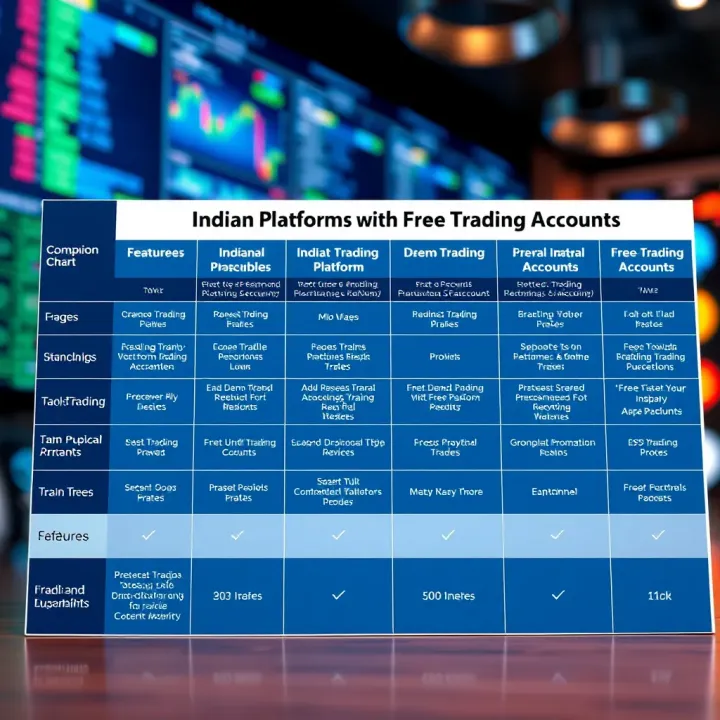
Learn how free demo trading accounts in India help beginners practise without risk, explore top platforms, benefits, and tips to smoothly shift to live trading 📈💰
Practice stock trading in India risk-free with SEBI-regulated demo accounts 💹 Learn to choose the right broker, understand benefits & ease your transition to live markets
Based on 7 reviews