

Understanding Range Markets in Trading
📈 Learn to spot and trade range markets smartly! Understand key traits, tools, and strategies, plus how these differ from trending markets for savvy trading.
Edited By
Amelia Reed
Dogecoin is one of those cryptocurrencies that began purely for fun but ended up shaking the crypto market. Launched in 2013, it took inspiration from the Shiba Inu dog meme, a lighthearted symbol that quickly gained traction online. Unlike Bitcoin or Ethereum, Dogecoin wasn’t originally designed as a serious digital asset, but rather as a satire of the crypto craze at the time.
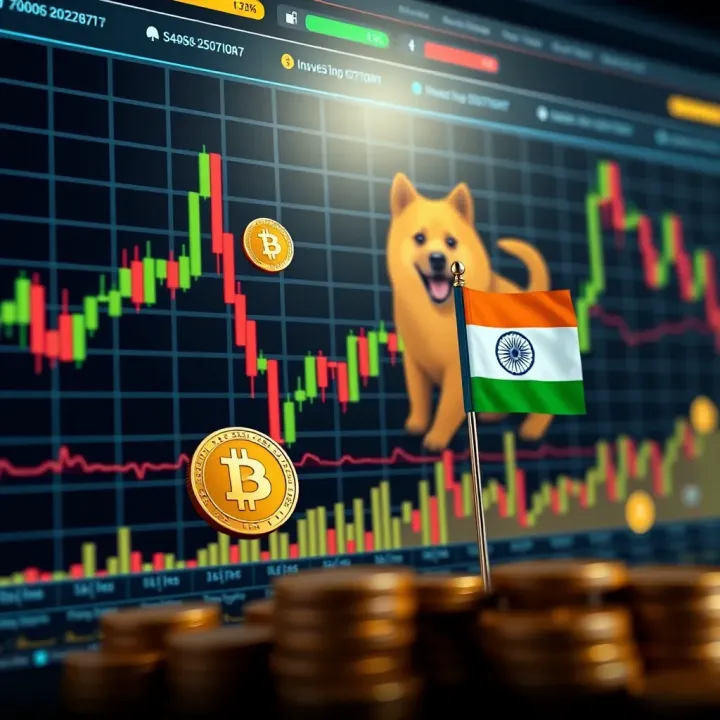
Its distinct charm lies in simplicity and community support. Dogecoin operates on a proof-of-work system similar to Bitcoin but uses a faster block time of one minute, which means transactions confirm quicker. Plus, it has no maximum cap on supply, unlike Bitcoin’s 21 million coins, making Dogecoin inflationary by design.
This inflationary nature may seem risky to investors at first, but it also encourages spending rather than hoarding. For example, Dogecoin has gained use in tipping content creators on social media and making small online purchases, showing practical applications beyond speculation.
With increasing interest in cryptocurrencies in India, understanding Dogecoin’s fundamentals matters. The crypto ecosystem here is evolving, with more platforms allowing easy access to altcoins like Dogecoin. Investors should consider its volatility, community influence, and regulatory environment before diving in.
Despite its meme origins, Dogecoin's active community and fast transaction capability make it a noteworthy digital currency worth analysing for portfolio diversification.
Dogecoin started as a meme but developed a serious following.
It features faster transaction times and no supply limit.
Its inflationary model encourages use in tipping and microtransactions.
Indian investors must stay cautious of market volatility and regulatory changes.
Understanding Dogecoin is not just about knowing its meme history but recognising how it fits into the broader spectrum of cryptocurrencies and what this means for trading and investment in today’s market.
Understanding where Dogecoin comes from helps you see why it stands out in the crypto world. Unlike Bitcoin or Ethereum, Dogecoin began not as a serious project but as a fun experiment. Knowing its origins sheds light on its unique community culture and how it manages to keep momentum despite market swings.
Dogecoin was created in late 2013 by Billy Markus, a software developer from the US, and Jackson Palmer, who worked in marketing in Australia. Both found the hype around Bitcoin overly serious and wanted to create a lighthearted alternative. Their goal was simple: build a cryptocurrency that anyone could enjoy without the pressure of big investments or complex tech jargon.
This down-to-earth beginning helped Dogecoin gain instant appeal, especially among people not deeply invested in traditional finance or crypto communities. Its accessibility remains a key factor in its continued popularity.
The Doge meme, featuring a Shiba Inu dog surrounded by broken English captions, was already popular online before the coin launched. Dogecoin’s branding used this meme to charm users and inject humour into the often technical world of cryptocurrencies.
This connection to internet culture helped Dogecoin go viral quickly, especially on social media. It made the coin relatable and approachable, attracting a crowds that might otherwise shy away from crypto. The meme’s playful tone still shapes Dogecoin’s community interactions today.
Originally, Dogecoin was meant as a joke, but the community embraced it seriously enough to build a supportive network. Users started tipping others with Dogecoin on platforms like Reddit and Twitter, creating a vibrant, friendly atmosphere.
This early community spirit turned Dogecoin into more than a meme; it became a vehicle for micropayments and small online transactions. Its low fees and fast transactions made it especially practical for everyday use, unlike some more cumbersome cryptocurrencies.
Dogecoin’s friendly image attracted many miners early on, especially those frustrated by Bitcoin’s increasing mining difficulty. It used the Scrypt algorithm, which allowed commodity hardware to mine Dogecoin effectively.
This accessibility helped grow its supply quickly and ensured a steady rate of new coins entering circulation, helping users test blockchain technology without huge costs.

Dogecoin’s community adopted charity and fundraising as a core part of its identity. For example, in 2014, users raised over $30,000 worth of Dogecoin to sponsor the Jamaican bobsled team’s trip to the Winter Olympics.
Such efforts have strengthened the bond among Dogecoin holders and showcased how digital currencies can support social causes beyond mere speculation.
High-profile endorsements, such as Elon Musk’s tweets, pushed Dogecoin into the global spotlight multiple times. While Musk’s influence led to price pumps and increased attention, it also sparked debates about market manipulation and the coin’s real value.
Media coverage followed, often focusing on Dogecoin’s meme origin story and its rollercoaster price movements. This buzz helped maintain interest, especially among younger investors and traders.
Dogecoin’s journey from meme to mainstream crypto shows how community culture and social media play crucial roles in digital assets’ popularity and resilience.
By understanding this background, traders and investors can better grasp why Dogecoin behaves differently than traditional cryptocurrencies and what factors influence its market dynamics.
Understanding Dogecoin’s technical features and blockchain mechanism is foundational for grasping how it operates and why it attracts users. Its core design determines transaction speed, security, and overall network behaviour which directly impacts user experience and investor confidence.
Dogecoin operates on the Proof of Work (PoW) consensus mechanism, similar to Bitcoin but with some notable twists. It uses the Scrypt algorithm, designed to be less resource-intensive than Bitcoin’s SHA-256. This means mining Dogecoin requires less specialised hardware, making it accessible to more participants and fostering a wider distribution of miners. For India’s growing crypto mining community, this lowers the entry barrier compared to Bitcoin.
The PoW mechanism itself ensures that transactions are verified through computational work, which helps secure the network from attacks. Since Dogecoin uses Scrypt, it achieves faster calculations and quicker confirmation times, although it doesn't fully eliminate power consumption concerns.
Regarding block time, Dogecoin has a relatively fast block creation interval of one minute, compared to Bitcoin's ten minutes. This quicker block time translates into faster transaction confirmations, making it practical for small, everyday payments. The supply model is inflationary—the system adds approximately five billion new Dogecoins each year, which is a contrast to Bitcoin’s capped supply of 21 million. This inflation reduces scarcity but supports ongoing miner rewards and network security.
Transaction speed and fees set Dogecoin apart. Its faster blocks mean transactions settle briskly, often within a minute, with very low fees—usually just a few paise. This makes it favourable for microtransactions and tipping, where high fees can be prohibitive. Bitcoin, on the other hand, tends to have higher fees and longer confirmation times during network congestion, not ideal for small amounts.
In terms of security and decentralisation, Dogecoin benefits from a more distributed mining community due to its Scrypt algorithm. However, its network hash rate is lower than Bitcoin's, which potentially makes it more vulnerable to 51% attacks, although this risk remains theoretical and unexploited so far. The blockchain itself is public and immutable, maintaining decentralisation, but the scale is smaller compared to Bitcoin.
Community-driven development is central to Dogecoin’s ethos. Unlike cryptos backed by large corporations or foundations, Dogecoin relies on volunteers and enthusiasts who maintain and upgrade its codebase. This grassroots approach reflects its informal origins and keeps development transparent and open. For investors and traders, this means updates can be less predictable but closely tied to community sentiment and needs.
Dogecoin’s technology balances accessibility and speed with some trade-offs in scarcity and security, suiting it well for niche use cases like tipping and charity rather than as a store of value.
This mix of technical choices underscores why Dogecoin remains popular among enthusiasts who value its practicality and community spirit over high-stake investment claims.
Dogecoin has carved a niche for itself in the cryptocurrency market, standing apart largely due to its unique origin as a meme coin and its vibrant community. Despite starting as a lighthearted project, it gained traction among investors and traders alike, especially during periods of heightened market activity. Its role underscores how social factors and viral trends can significantly sway market dynamics.
Historically, Dogecoin’s price trends have shown sharp spikes followed by steep corrections. For instance, during early 2021, the coin rose from a mere fraction of a rupee to over ₹30 within months. This surge was driven initially by a wave of speculative interest rather than fundamental changes in technology. While it offered quick profits for some, others faced heavy losses when the price dipped just as quickly. Understanding these trends is essential for investors, as they signal the risks tied to market hype and timing.
The volatility of Dogecoin is high compared to established cryptocurrencies like Bitcoin or Ethereum. Several factors influence its value: social media buzz, celebrity endorsements, and general market sentiment. Notably, unlike traditional assets, Dogecoin lacks intrinsic valuation metrics such as earnings or assets backing it, so its price often moves on sentiment alone. Traders need to be cautious and should avoid investing amounts they cannot afford to lose, given such unpredictability.
Elon Musk’s tweets and public statements have notably affected Dogecoin’s price movements. His casual endorsements, such as calling it “the people’s crypto,” have led to short-term price rallies. However, these effects tend to be temporary, causing price swings that can confuse or mislead casual investors. This influence shows how individual voices can impact digital assets, blurring lines between market fundamentals and popularity contests.
Community hype and online campaigns also play a significant role. Platforms like Reddit and Twitter have hosted large discussions, memes, and coordinated buying efforts, which sometimes create a bandwagon effect. For example, campaigns to support Dogecoin-funded charity drives or fun projects have raised the coin’s profile beyond regular trading circles. While this boosts visibility, investors should separate genuine utility from marketing hype to avoid poor investment decisions.
In essence, Dogecoin highlights the intertwined nature of social influence and market forces in today’s cryptocurrency space. Traders and analysts should carefully weigh both technical factors and the social landscape when considering Dogecoin.
Dogecoin, once just a meme, has proven its worth through real-life applications. Its ease of use and low transaction fees make it an option often chosen for practical purposes. People and businesses are increasingly adopting Dogecoin beyond speculation, contributing to its staying power in the cryptocurrency space.
Dogecoin’s design, which supports fast processing times and minimal fees, suits micropayments perfectly. For instance, tipping small amounts to content creators or freelancers online has become popular thanks to Dogecoin's cost-effectiveness. Indian platforms like WazirX and CoinDCX support Dogecoin trading, allowing users to send tokens quickly without hefty charges. This feature makes Dogecoin appealing for everyday transfers that would otherwise be uneconomical with traditional banking or even some other cryptocurrencies.
Several wallets such as Trust Wallet, CoinSwitch Kuber, and Atomic Wallet include Dogecoin support. Their user-friendly apps enable quick transfers directly from mobiles, helping expand Dogecoin’s reach. This adoption by multiple platforms and wallets not only makes transactions accessible but also encourages more traders and investors in India to experiment with Dogecoin through everyday use.
Dogecoin’s community has a history of rallying around charitable causes. One hallmark project was the Dogecoin charity drive to send the Jamaican bobsled team to the 2014 Winter Olympics, which raised thousands of dollars in Dogecoin. Such campaigns show the practical use of the token to rally communal support rapidly and transparently.
Besides one-off efforts, Dogecoin’s community-driven initiatives often target social causes such as providing clean water in developing regions or raising funds for disaster relief. Community members pool Dogecoin contributions directly without intermediaries, which reduces overhead and increases efficiency. Indian crowdfunding platforms could potentially harness this model, encouraging local fundraising efforts via Dogecoin donations, bolstered by its growing popularity.
Dogecoin's real strength lies in its active community and practical adoption, making it more than just a meme—it functions as a lightweight, fast, and affordable crypto for small payments and social causes.
Through everyday micropayments and philanthropy, Dogecoin is carving a niche that proves its relevance in the evolving crypto economy, especially for Indian users looking for accessible digital currency options.
Investing in Dogecoin presents unique challenges and opportunities for Indian investors. Due to its meme-driven origin and high volatility, it's critical to understand the risks, regulatory environment, and practical steps for buying and holding this cryptocurrency in India.
Price unpredictability and market sentiment dominate Dogecoin's investment profile. Unlike traditional assets, Dogecoin’s value can swing wildly within hours, often triggered by social media trends or endorsements by personalities like Elon Musk. For example, a single tweet could cause prices to shoot up by 20-30% or drop just as steeply. This volatile behaviour can offer high returns but also sudden losses, making Dogecoin unsuitable for risk-averse investors.
For Indian investors, market sentiment is influenced by both global crypto trends and local factors such as exchange liquidity and trading volumes. Illiquid markets on smaller Indian crypto exchanges can amplify price swings, adding to unpredictability.
Regulatory environment in India remains uncertain for cryptocurrencies, including Dogecoin. The Indian government and the Reserve Bank of India (RBI) have yet to frame clear, comprehensive rules regarding crypto ownership, trading, and taxation. While there’s no blanket ban, investors face regulatory risks stemming from possible future restrictions or sudden policy shifts.
The proposed Cryptocurrency and Regulation of Official Digital Currency Bill has been in discussion for years but is yet to be passed. This uncertainty means investing in Dogecoin carries the risk of regulatory changes that could impact trading platforms, ease of withdrawals, or compliance requirements.
Popular exchanges offering Dogecoin include WazirX, CoinDCX, and Bitbns. These platforms provide a user-friendly interface for beginners and access to Dogecoin paired with INR and other cryptocurrencies. Choosing a reputable exchange helps ensure security and liquidity, reducing the risk of losing funds.
Each exchange has its own fee structure and limits, so investors should compare transaction costs and withdrawal charges before committing large amounts.
Deposit and withdrawal methods typically involve linking your Indian bank account or using UPI for instant transfers. Most exchanges process deposits quickly, allowing timely entry into the market. Withdrawals, especially to external wallets, can take longer and may incur network fees. For example, transferring Dogecoin from an exchange to a private wallet could cost a small DOGE fee, depending on network congestion.
Using Indian payment methods like UPI for deposits has made crypto investing more accessible, but investors must confirm withdrawal policies to avoid surprises.
Tax implications and reporting for Dogecoin investments fall under the Income Tax Department’s purview. Gains from trading Dogecoin are treated as capital gains or business income, depending on trading frequency and holding period. Short-term gains (held less than 36 months) are taxed at the investor’s slab rate, while long-term gains enjoy a 20% tax with indexation benefits.
Losses can be set off against gains from other cryptocurrencies but not against salary or other income sources. Importantly, investors must report crypto holdings and transactions in their Income Tax Returns (ITR) accurately to avoid penalties.
For Indian investors, understanding how Dogecoin fits within current tax rules and regulatory uncertainties is vital before committing funds. Close attention to exchange choice, deposit methods, and tax reporting can make investing more manageable despite the coin’s wild price swings.
📈 Learn to spot and trade range markets smartly! Understand key traits, tools, and strategies, plus how these differ from trending markets for savvy trading.

Explore Qutex in depth: understand its definition, features, practical uses, benefits⭐ and applications across different fields📊 for smarter tech insights!

Explore Qutex trading basics, tech, benefits, and risks 🤝. Get practical tips tailored for Indian traders aiming to expand their skills 📈.

Explore Qutex Trade 📈: a clear guide to its features, how it works, security, benefits & challenges—ideal for Indian investors seeking smart trading tips.
Based on 6 reviews