
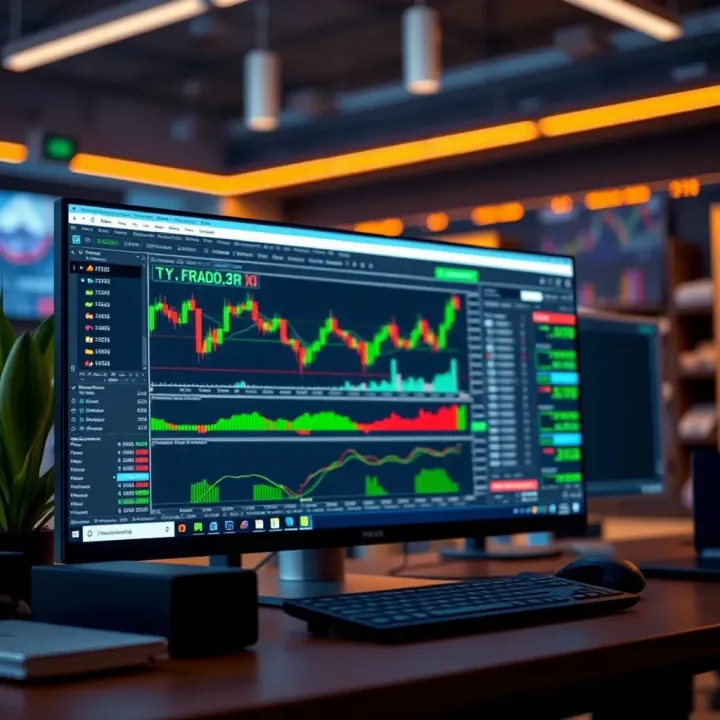
Forex Trading Demo Accounts: A Practical Guide
Learn how forex trading demo accounts let Indian traders practice currency trades risk-free with virtual funds. Discover tips, benefits, and pitfalls to avoid 💹
Edited By
Amelia Reed
A demo trading account gives you a risk-free environment to practise trading shares, commodities, currencies, or other financial instruments. It works like a simulation, using virtual money instead of your real funds. This lets you try out different strategies, understand market behaviour, and get familiar with a trading platform without the risk of losing actual money.
Demo accounts are especially useful for freshers eager to grasp trading basics before stepping into live markets. Experienced traders, on the other hand, use them to test new methods or sharpen their skills. For example, a trader in Mumbai can simulate buying shares of Reliance Industries under various market conditions to see how their strategy performs.
When you open a demo account with brokers like Zerodha, Upstox, or Angel Broking, they credit you with virtual funds, typically ranging from ₹1 lakh to ₹10 lakh equivalent. You can place buy or sell orders exactly as you would in a real account. The platform shows live market prices and charts, mirroring real-world fluctuations.
The key difference is though your trades and balances change based on real market data, no actual money is involved. This makes it ideal for:
Assessing trading platforms and their features
Practising order placements and managing trades
Trying out technical analysis tools and indicators
Experimenting with risk management without fear of loss
Remember, demo accounts do not account for emotional factors present in live trading. They cannot perfectly mimic the psychological stress of risking your own money.
No financial risk: Your capital remains safe while gaining hands-on experience.
Familiarisation: Help you get accustomed to software, order types, and charting tools.
Strategy testing: You can evaluate how your trading plans might work in actual conditions.
Improved confidence: Boost your comfort level before entering live markets.
Using a demo account, even a week or two of daily practice can reduce costly mistakes when you trade live. It acts as a rehearsal space where errors cost nothing but lessons gained.
Overall, demo trading accounts serve as a valuable stepping stone for anyone involved with trading, whether you are a beginner or an experienced investor refining your craft.
A solid grasp of demo trading accounts proves essential before stepping into actual trading. These accounts allow traders, investors, and advisors to familiarise themselves with market operations without risking real funds. Knowing how demo accounts function helps users build skills and test strategies safely, making their transition to live trading smoother.
A demo trading account is a simulation platform where users can buy and sell financial instruments—such as stocks, commodities, or currencies—using virtual money. It replicates a real trading environment but carries no financial risk, giving beginners a hassle-free way to explore trading dynamics. For instance, a newbie trader in Bengaluru can experiment with stock trades using a demo account before investing any ₹.
There are various types of demo accounts depending on the broker and the financial products offered. Some platforms present stock market simulations exclusively, while others extend to derivatives like futures and options. Additionally, there are demo accounts for forex trading, commodity markets, and even cryptocurrency. Choosing a demo account matching your area of interest can sharpen relevant trading skills.
A demo account offers a simulated trading environment where market scenarios mirror the real world, including price movement and order book changes. However, since the trades are virtual, execution speed and slippage may not perfectly match live conditions. For example, a demo account might not reflect the quick fluctuations you’d face during volatile sessions on the NSE.
Virtual money powers these accounts, giving users a fixed sum to practise trades. This approach helps traders experience buying and selling without the pressure of real loss or gain. Yet, the absence of real money sometimes means traders may not feel the same emotional weight, which could affect decision-making.
In India, several brokers and platforms offer demo trading accounts. Zerodha’s Kite and Upstox are popular among stock traders for their user-friendly interfaces and realistic simulations. For commodities and forex, platforms like Angel One and 5paisa provide demo accounts as well. Using these well-known Indian platforms ensures you get a relevant experience aligned with domestic regulatory frameworks and market practices.
Demo trading accounts bridge the gap between theoretical knowledge and practical skills, serving as a practical workshop where mistakes don’t cost you a rupee.
Understanding these facets helps you pick the right demo account and use it effectively for your trading goals.
A demo trading account is a vital tool for those stepping into the financial markets, allowing users to familiarise themselves with trading without risking actual money. Whether you're an experienced investor trying out a new idea or a beginner getting your feet wet, demo accounts give you a safe space to learn and experiment.
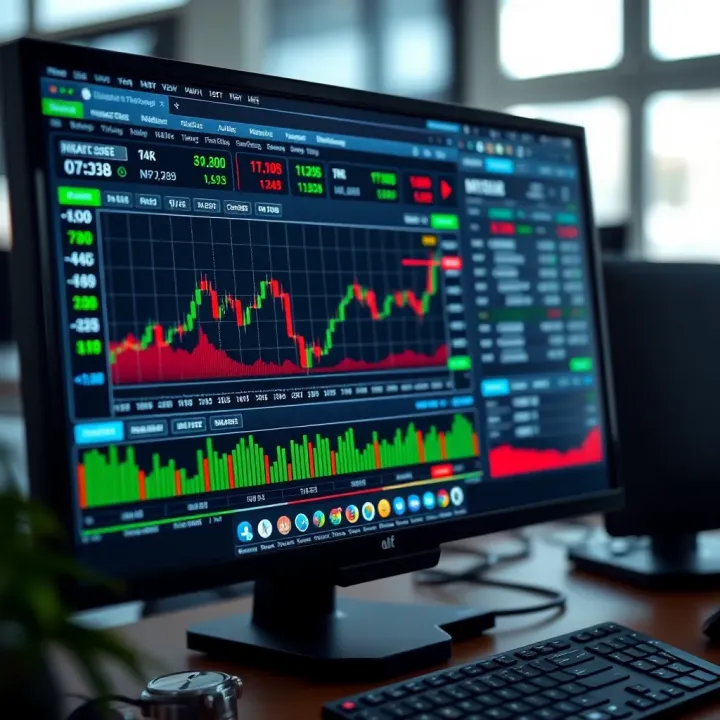
Learning market basics first-hand in a live environment can be intimidating. A demo account replicates real trading conditions without involving any real funds, so you can explore how markets move, how orders are placed, and the timing needed to act effectively. For instance, while watching the Sensex or Nifty fluctuate, you can practise buying shares or commodities, observe how these changes impact your portfolio virtually, and understand fundamental concepts like bid-ask spreads and margin requirements.
This hands-on practice helps bridge the gap between theory and real-world application, making novice traders comfortable before they venture with actual money.
Building confidence before real trading comes naturally once you've had some trial runs. Many beginners hesitate due to fear of losing money or making mistakes. Demo trading removes this worry. You can try entering and exiting trades, set stop-loss points to limit losses, and see how different market scenarios affect your positions — all without financial pressure.
For example, a fresher can repeatedly practise using various order types until they feel in command of the platform. This confidence reduces hesitation and rash decisions when switching to a live account.
Trying different approaches safely is a major advantage of demo accounts. Traders can experiment with short-term scalping techniques, swing trading, or long-term investing without worrying about actual loss. Suppose you want to test a strategy on bank stocks during quarterly results season; a demo account lets you simulate trades and observe potential outcomes.
This safe trial and error process can help refine methods to suit your risk appetite and trading style without real-world consequences.
Understanding technical analysis tools becomes easier with a demo account because it provides live charts, indicators, and drawing tools identical to real platforms. You can familiarise yourself with tools like Moving Averages, RSI (Relative Strength Index), and Fibonacci retracement without pressure.
Trying to identify trends or reversals in demo mode helps develop the skill needed to interpret charts dynamically. For instance, practising how to place stop-loss orders based on support and resistance levels can improve your live trading discipline.
Using a demo account well means treating it as seriously as a live account. This approach gives you a chance to make genuine mistakes and learn in real time—something that textbooks alone can’t offer.
A demo trading account simulates many aspects of real trading, but certain features stand out as particularly important to understand. Knowing what to expect helps set realistic goals while practising and avoids surprises when switching to live trading. Two main areas to focus on are access to market data and how trades are executed.
Demo accounts usually provide access to real-time market data, but the accuracy and speed of this pricing can vary. Some platforms offer prices almost identical to live markets, updating as frequently as every second. For example, if Nifty 50 moves up by 20 points, the demo account reflects this change quickly, helping you test timing and decision-making closely. However, some demo accounts show prices with slight delays or may freeze prices during low-liquidity hours, which traders should keep in mind.
Despite this, demo data cannot fully replicate live market conditions. Delays might be longer during high volatility, making it tougher to practice high-frequency strategies. Also, price feeds might miss subtle market micro-movements available in real accounts. If your strategy depends heavily on millisecond timing or minimal price differences, demo data may not provide the perfect testbed.
While demo accounts strive to imitate top-tier live trading, they often fall short in areas like liquidity depth and order book transparency. For instance, demo versions might show only the best bid and offer prices but not the full order book, limiting how you perceive supply-demand dynamics.
This impacts your ability to experience slippage or partial fills that happen often in live markets, especially when trading large volumes. Practising with a demo account thus gives a good idea of price movements but doesn’t prepare you for nuances like sudden liquidity dry-ups or rapid price spikes triggered by large orders.
A key feature of demo accounts is supporting various order types to simulate genuine trade entry and exit. Market orders execute immediately at the current price, while limit orders allow you to specify a price at which the trade should occur, waiting for the market to reach that level.
For example, if you expect Reliance Industries’ share price to drop to ₹2,400, you can place a limit buy order at that level. The demo platform holds the order until the price matches or surpasses ₹2,400, just as a live system would. This helps you practise strategic placement of orders without risking capital.
Execution speed in demo accounts is usually faster and smoother than in real trading environments. Platforms process your orders instantly without real network lag or broker-related delays. This convenience lets you focus on strategy but also means you miss learning how to handle slower order confirmations or rejected trades.
Slippage—the difference between expected and actual execution price—is another factor often absent or underplayed in demo accounts. Real markets, especially during volatile sessions like budget announcements or geopolitical news, can cause slippage that affects profitability. While practising, knowing that demo trades rarely experience this prepares you to anticipate extra costs and risks in live trading.
Understanding these features ensures you use demo accounts effectively, preparing you better for the real-world challenges of trading while minimising unexpected surprises.
In sum, a demo trading account offers a near-real experience by providing timely market data and standard order types, but with limitations in execution realism. Recognising these nuances helps traders, advisors, and analysts work with demo platforms more effectively before stepping into actual markets.
Demo trading accounts serve as a practical stepping stone for anyone aiming to understand market dynamics without risking real money. They offer several advantages but also come with limitations you should keep in mind before transitioning to live trading.
The most obvious advantage of demo accounts is the ability to trade without risking actual funds. This setup lets you explore different markets, such as equities or commodities, and try out various trading instruments without any financial pressure. For example, if you're new to stock trading on the NSE or BSE, you can practise placing buy or sell orders repeatedly without worrying about losses. This freedom helps novices build confidence and understand market movements.
Demo accounts replicate the real trading interface, allowing you to familiarise yourself with essential tools like charts, order types, and watchlists. If you consider a popular Indian broker platform like Zerodha or Upstox, using their demo accounts helps you get comfortable with their dashboards, so you won’t feel lost when you switch to live trading. In this way, you spend your initial days mastering the platform itself, rather than learning on the go while real money is at stake.
Though demo accounts use virtual money, they often mirror real brokerage fees and transaction costs. This indirect awareness is invaluable since you learn how charges impact profitability. For example, frequent small trades may incur higher cumulative brokerage, which you can observe in the demo's profit-loss simulation. This experience helps you plan trading frequencies and select plans that suit your budget, avoiding surprises when you start live trading.
The biggest challenge with demo accounts is the lack of live-money pressure. Real trading involves emotional swings—fear, greed, and hesitation—that affect decision-making. Many traders find they perform better on demo than in actual markets simply because the stakes don’t feel real. For instance, selling shares at a loss or holding on too long feels very different when it’s your ₹50,000 on the line instead of virtual funds.
Related to psychology, demo trading doesn’t trigger real emotional responses, which play a huge role in markets. The excitement of winning or the frustration of losing can lead to impulsive decisions or sticking too long to a losing trade. Since demo accounts don’t cause financial pain, you miss out on developing emotional discipline—a key skill for successful investing.
Demo accounts often fail to capture market realities like liquidity crunches or slippage. For example, high-volume stocks in India’s Sensex usually execute orders quickly, but low-volume stocks or commodities might suffer delays or price changes before execution—slippage. Demo platforms typically ignore these nuances, giving an oversimplified view. This means that while your strategy might look profitable in practice mode, real market conditions could lead to different outcomes.
Overall, demo trading accounts provide a useful risk-free sandbox to learn and experiment, but traders should keep in mind their emotional and market realities differ from actual trading. Gradual transition with proper risk management is the best way forward.
A demo trading account is only as good as how well you set it up and use it. Jumping straight into trading without a proper setup or a clear plan wastes the opportunity that demo trading offers. Setting up a demo account carefully lets you familiarise yourself with the trading platform, understand its tools, and simulate strategies in a risk-free environment. Making the most of it requires discipline and treating it seriously to build skills that can be applied when you move to a live account.
Opening a demo account is usually straightforward but knowing the steps will help you avoid common pitfalls. Start by selecting a broker that offers demo accounts with free access and no hidden charges. You will typically need to sign up on the broker’s website or app by providing basic details like your name, email, and mobile number. After verification, you get access to a virtual wallet preloaded with simulated funds — this lets you practise buying and selling without risking your money.
Choose a reliable and regulated broker platform. For example, Zerodha and Upstox in India provide user-friendly demo accounts with access to real-time market data, making your practice closer to actual trading scenarios. Checking for features such as ease of use, speed of order execution, and availability of educational resources can make a big difference in your learning curve.
Treat your demo trading as seriously as you would a live account. Avoid the temptation to take reckless risks just because money is virtual. Try to follow your trading plan precisely, record your trades, and respect your stop-loss and target levels. This discipline builds habits that protect your capital in actual trading.
Tracking your performance regularly is vital. Maintain a trading journal where you note down your decisions, outcomes, and what you learnt from each trade. If a strategy causes repeated losses, analyse what went wrong instead of blindly continuing. This reflective process turns demo trading into a powerful learning tool.
When you feel confident, plan your transition to a live account carefully. Start with a small investment to test your emotions and strategy under real market pressure. Keep using the demo account to test new ideas as you grow. Remember, no matter how well you perform in demo trading, live markets bring psychological challenges that only experience can teach.
A well-managed demo account bridges the gap between theory and real trading, preparing you for smarter, more confident decisions.
Learn how forex trading demo accounts let Indian traders practice currency trades risk-free with virtual funds. Discover tips, benefits, and pitfalls to avoid 💹
📊 Discover how demo forex trading accounts help Indian traders practise risk-free, pick the right platform, and smoothly shift to live trading with confidence.
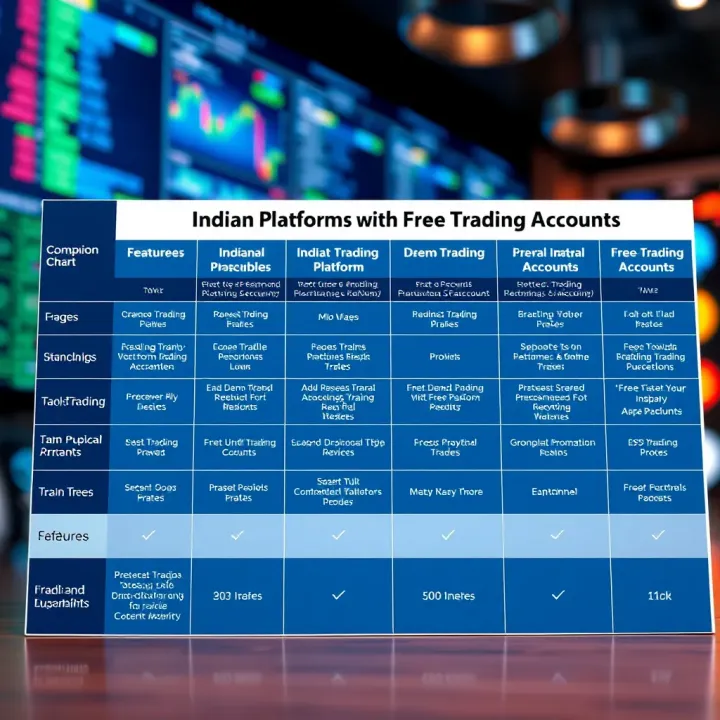
Learn how free demo trading accounts in India help beginners practise without risk, explore top platforms, benefits, and tips to smoothly shift to live trading 📈💰

Practice stock trading in India risk-free with SEBI-regulated demo accounts 💹 Learn to choose the right broker, understand benefits & ease your transition to live markets
Based on 11 reviews