
Forex Trading Demo Accounts: A Practical Guide
Learn how forex trading demo accounts let Indian traders practice currency trades risk-free with virtual funds. Discover tips, benefits, and pitfalls to avoid 💹
Edited By
Amelia Foster
Demo trading accounts have become an essential tool for anyone looking to enter financial markets, especially for beginners and those testing new strategies. These accounts let you try trading in instruments like stocks, commodities, or currencies without risking real money. The simulation replicates actual market conditions, which means you get to react to price changes, market news, and order executions just like in live trading.
For Indian traders, demo accounts offered by platforms like Zerodha, Upstox, and Angel Broking provide a practical way to understand trading mechanics before putting in ₹10,000 or ₹1 lakh at stake. Think of it as practising cricket in the nets before the match—only here, you're practising buying and selling in the stock market.

Demo trading offers several clear advantages:
Familiarity with trading platforms without pressure
Testing different trading strategies without financial risk
Learning order types such as market, limit, and stop-loss
Understanding margin and leverage effects
A demo account lets you learn the ropes while your capital stays intact.
While they are highly useful, demo accounts come with some limitations. Market emotions like fear and greed don’t show up the same way when you’re not dealing with real money. This emotional disconnect can affect decision-making when you transition to live markets. Besides, demo trading usually uses delayed data or may exclude certain costs like slippage and partial fills.
To make the most of demo accounts, Indian traders should:
Treat practice sessions seriously, simulating realistic trade sizes.
Use the platform’s educational tools and tutorials.
Track performance over weeks to identify areas needing improvement.
Gradually move to live trading with small amounts.
In short, demo trading accounts act as a valuable sandbox for investors and traders in India to hone their skills, try out methods, and get comfortable with digital trading platforms. Using them wisely can ease the entry into the financial markets and improve trading confidence over time.
A demo trading account is a practice platform provided by brokers, allowing traders to simulate buying and selling financial instruments without risking real money. It plays a vital role especially for beginners in India to get hands-on experience with trading mechanics before committing actual funds.
Demo accounts create a virtual stage that mirrors real financial markets but using imaginary money. This simulated environment lets users place trades, observe market fluctuations, and execute orders just like in live trading. For example, if you’re exploring equities on the NSE, a demo account helps you test market orders or limit orders with virtual funds, enabling practical learning without any financial risk.
For someone new to trading, understanding platform features and market response is critical. A demo account serves as a dependable learning tool, offering direct exposure to trading interfaces, chart analysis, and other features without fear of losses. Many traders in India find it invaluable to familiarise with instruments like stocks, commodities, or forex via these accounts before stepping into the live markets.
The most attractive aspect is that demo trading eliminates the risk of losing real money. Beginners can try diverse strategies or explore unfamiliar markets without spending a paisa. This cushion allows learners to make mistakes, learn discipline, and refine their approach, all without financial pressure.
Demo accounts credit users with virtual funds, typically adequate enough to simulate real trading volumes and positions. For example, ₹5 lakh virtual rupees allow you to test large trades or multiple positions. This virtual capital helps you experience realistic balance updates and margin calculations, giving a genuine insight into money management.
To ensure authenticity, demo accounts pull live market data or closely approximate it, reflecting actual price changes and volume. Whether trading Nifty futures or USD/INR currency pairs, the price movements mirror real-time trends with minimal latency. This integration enables traders to monitor real market volatility and price swings as they would in actual trading.
Execution on a demo platform follows the same process as live trading—placing orders, modifying them, or cancelling is part of the workflow. It allows you to evaluate order types like market, limit, stop-loss, and trailing stops in a risk-free setting. Though execution here is usually instantaneous without real liquidity constraints, it closely imitates a broker’s trading system, preparing you for live order handling.
Demo trading accounts act like flight simulators for pilots — they provide all realistic controls except the actual risks, making the transition to real trading smoother and safer.
This foundational understanding helps you navigate the trading world confidently while minimising costly mistakes when real money is finally involved.
Demo trading accounts offer a valuable stepping stone for anyone venturing into the financial markets. They provide a risk-free space to explore trading platforms, test strategies, and build necessary habits before handling real money. For traders in India, where market volatility and regulatory updates are frequent, demo accounts help in gaining initial confidence and understanding market mechanics without financial pressure.
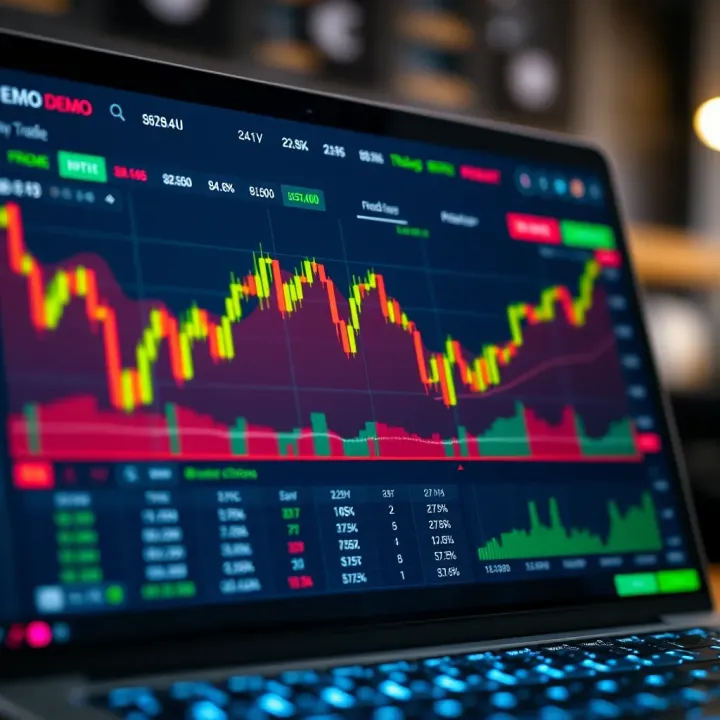
Navigation and features: Every trading platform has unique interfaces and tools. A demo account lets you explore these features thoroughly—everything from charting tools, indicators, to order placement options. For example, if you’re trying out Zerodha's Kite or Upstox Pro, practising on a demo account helps you get comfortable with their dashboards, watchlists, and real-time data feeds. This hands-on experience prevents costly mistakes that often come from fumbling with unfamiliar platforms during live trading.
Order types and execution: Demo accounts also let you learn the different order types such as market, limit, stop-loss, and bracket orders the broker offers. Placing orders repeatedly in a risk-free environment enables you to understand how each type works and when to use it. For instance, knowing how to use a stop-loss order effectively can limit losses in volatile Indian markets. This practice sharpens your decision-making and order management skills.
Evaluating risk-reward: A demo account allows you to put various trading strategies to test without risking real money. You can check how different risk-reward ratios perform, say, targeting a 1:2 ratio instead of 1:1, and observe the outcomes over time. This clear feedback guides you in tuning your strategies to your risk appetite, something a newbie might find tough without losing capital.
Understanding market reactions: Markets can be unpredictable. By using a demo account, you get to see how specific economic news, corporate results, or geopolitical events affect price movements. Imagine you test trading options around RBI policy announcements; the experience helps you anticipate market volatility patterns so you can plan entries and exits better when you switch to live trading.
Practising emotional control: Trading triggers emotions like fear and greed, which can cloud judgement and lead to impulsive decisions. Demo trading exposes you to these psychological elements in a safe setting. Over time, this practice helps you develop emotional discipline, teaching you to stick to your plan rather than chasing losses or entering hasty trades.
Learning money management: Sound money management is key to surviving and growing in the markets. Demo accounts help you practise position sizing, diversification, and setting stop-losses without financial stress. You get the hang of allocating a sensible portion of your virtual capital per trade, which lays a solid foundation for handling real funds responsibly once you start live trading.
Using a demo trading account isn’t just about experimenting—it’s training in the proper conduct of trading. It develops technical skills, sharpens strategy evaluation, and strengthens mental readiness, all crucial for long-term success in India’s dynamic markets.
While demo trading accounts offer a safe space to learn and experiment, they come with a set of limitations that traders should understand before transitioning to live markets. Recognising these constraints helps set realistic expectations and prepare better for real trading scenarios.
When trading on a demo account, there's no actual financial risk involved. This makes the experience quite different from live trading, where every decision impacts your capital. Traders often find it easier to make bold or frequent trades in a simulated environment because losses don’t affect their real money. For example, an amateur trader might take on higher leverage or ignore stop-loss rules while demo trading. Such behaviour seldom carries over to the live market once real money is on the line, as fear and greed come into play.
Demo platforms typically simulate ideal market conditions, which means orders are filled immediately at requested prices. In reality, especially during volatile sessions in Indian markets, liquidity — the ease of buying or selling assets — can vary. This leads to slippage, where the executed price differs from the expected one. For instance, if you place a market order for Nifty futures during sudden price swings, the execution price can move unfavourably. Demo accounts usually don’t replicate this nuance, so traders may overestimate their ability to enter or exit trades precisely.
Trading real money triggers emotions like anxiety, excitement, and regret, which significantly influence decisions. Demo trading lacks this emotional weight. Without the stress of losing money, traders can remain calm and rational, but this doesn’t prepare them well for the psychological challenges of live trading. For example, a trader might patiently hold losing positions during demo trading but panic and exit prematurely when faced with real losses. This emotional disconnect limits the demo experience in building mental resilience.
Many brokers offer demo accounts for limited durations, typically ranging from a few days to a couple of months. This time constraint imposes a deadline on learning and practising strategies. Traders needing more time to gain confidence might find this frustrating, especially when gearing up for larger trades in Indian stock markets or derivatives. For instance, some brokers in India provide only 30-day demo access, after which users must shift to live accounts.
Certain brokers restrict demo account functionalities to encourage users toward funded accounts. Features like market depth, advanced order types, or mobile platform support might be limited or unavailable in the demo version. This restricts how thoroughly a trader can test strategies or familiarise with tools. For example, a trader practising swing trading may not get access to necessary charting tools or historical data, limiting the demo’s usefulness.
Taking demo accounts as a full substitute for live trading can mislead new traders. The best approach involves using demos as a preparation ground but recognising their limits, especially around emotional and market condition differences.
Understanding these limitations ensures you don’t over-rely on demo trading and plan your transition to live markets with greater confidence and realism.
Selecting an appropriate demo trading account is vital for Indian traders aiming to sharpen their skills without risking real money. The right demo account lets you practice effectively by mimicking live conditions as closely as possible, offering practical market experience and building your confidence. Given the variety of brokers and platforms available, focusing on factors like broker credibility, platform features, and regional relevance can make a real difference in your learning journey.
When choosing a broker for demo trading, reliability matters most. Look for brokers registered with the Securities and Exchange Board of India (SEBI), as this ensures regulatory oversight and a certain standard of operation. Also, consider how closely their demo environment matches live trading. The availability of adequate virtual funds, execution speed, and realistic market data are key points. Avoid brokers with poor customer feedback or limitations on their demo accounts, like extremely short trial periods or restricted access to certain instruments.
Companies like Zerodha, Upstox, and Angel Broking are well-known in India and offer robust demo accounts. Zerodha’s Kite platform, for example, provides a user-friendly interface with real-time market data for practice. Upstox’s demo allows access to various segments including commodities and equities, useful for traders wanting broader exposure. Angel Broking not only offers a demo for paper trading but also integrates educational resources to boost learning. These brokers combine strong platform design with regulatory compliance, making them ideal choices for Indian traders starting with demo accounts.
A clean, intuitive interface helps users focus on strategy rather than navigation dilemmas. Features like drag-and-drop charts, multiple indicators, and easy order placement improve the learning curve dramatically. Platforms that allow customisation of tools and layouts support different trading styles, making your practice more relevant. For example, Zerodha’s Kite provides advanced charting and quick order execution buttons, making it easier for users to simulate real trading.
Ensure the demo account covers markets and instruments you intend to trade. This could include equity shares, derivatives, commodities, currencies, or even mutual funds. Broader coverage lets you test strategies across asset classes, which is critical given how market conditions can affect different instruments. If you plan to trade the Nifty 50 or Bank Nifty indexes, choose platforms offering those futures and options in the demo environment.
Today, mobility is key. Choose demo accounts offering both desktop and mobile apps with synced data. This flexibility lets you practise on the go or from your workstation, mimicking real trading habits. For instance, Upstox has a seamless mobile app experience consistent with its desktop platform, allowing traders to switch devices effortlessly. Such versatility helps in getting comfortable with different interfaces and handling trades anytime, anywhere.
Selecting the right demo trading account tailored to Indian markets equips you with practical experience, realistic tools, and confidence essential for a smooth transition to live trading.
Using a demo trading account effectively can sharpen your skills and prepare you for live markets. However, simply trading without a plan won’t yield much benefit. To really gain from the demo phase, you must set clear goals, simulate real market conditions as closely as possible, and approach the transition to real trading carefully. This section walks you through practical steps to get the most from your practice account.
It helps to identify particular skills you want to develop while practising. For example, you might concentrate on mastering chart analysis, understanding order types like stop-loss and limit orders, or perfecting entry and exit timing. By narrowing your focus, you avoid spreading your attention too thin across multiple areas and instead build expertise incrementally. This approach is especially useful for Indian traders starting with limited exposure to complex markets.
Regularly monitoring your performance can highlight strengths and areas needing improvement. Maintain a trading journal detailing each trade’s rationale, execution, and outcome. Over time, this record helps spot patterns—such as recurring mistakes in risk management or emotional decisions triggered by market swings. Tracking progress doesn’t have to be fancy; a simple spreadsheet updated after every session works well to keep you accountable and organise learning.
Many traders treat demo money carelessly, knowing no real loss occurs. This mindset diminishes the practice’s value since real trading demands discipline and caution with actual capital. To mimic real conditions, set a fixed virtual budget and act as if each rupee matters. For instance, if you allocate ₹1 lakh in your demo, avoid taking risky trades that could wipe out that amount quickly. This habit builds the right attitude early on.
Ignoring brokerage fees, taxes, and slippage will distort your strategy’s profitability on a demo account. If your broker charges ₹20 per trade or there is a ₹10 stamp duty for investing in stocks, factor these in mentally during your trial runs. This inclusion gives a more realistic picture of net gains or losses. Knowing that costs chip away at profits can encourage more thoughtful decisions and quicken your learning curve.
Don’t rush to deploy large capital immediately. Start live trading with a small amount—say ₹10,000 or ₹25,000—while continuing to practise on the demo side for new strategies. A phased approach lets you adjust emotionally and financially to real market pressures.
Many traders who do well on demo accounts fail to keep the same discipline on live platforms. Avoid impulsive trades or chasing losses by adhering strictly to your pre-defined money and risk management rules. Using a checklist or pre-trade routine can help preserve the structured approach learned in practice, increasing your chances of consistent profitability.
The key to success with demo trading is to treat it as a serious learning tool, not a playground. Practising with purpose and realism equips you steadily for real-world markets.
Learn how forex trading demo accounts let Indian traders practice currency trades risk-free with virtual funds. Discover tips, benefits, and pitfalls to avoid 💹
📊 Discover how demo forex trading accounts help Indian traders practise risk-free, pick the right platform, and smoothly shift to live trading with confidence.

Learn how free demo trading accounts in India help beginners practise without risk, explore top platforms, benefits, and tips to smoothly shift to live trading 📈💰

Understand forex demo accounts 📊: learn how to practise trading with zero risk, explore benefits, overcome limits, select the right demo, and sharpen your strategy before live trades.
Based on 5 reviews