
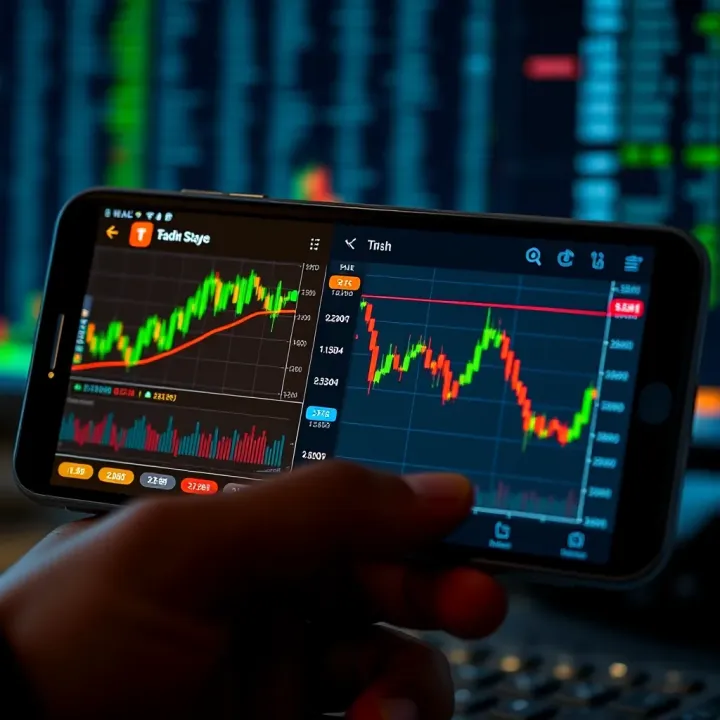
Choosing the Right Trading App in India
📱 Discover how to pick the right trading app in India by exploring key features, security tips, top platforms, and practical advice for both new and seasoned traders.
Edited By
Jack Wilson
Choosing a quick trading app is now essential for Indian investors aiming to move fast in financial markets. The apps help buy and sell shares, commodities, or currencies with just a few taps on a smartphone. What sets quick trading apps apart is their speed and ease – features crucial when market prices can change in seconds.
These apps are designed to simplify trading by offering user-friendly interfaces, real-time price updates, and instant order execution. For example, Zerodha, Upstox, and Angel Broking provide such experiences tailored to Indian traders, blending powerful tools with accessibility.
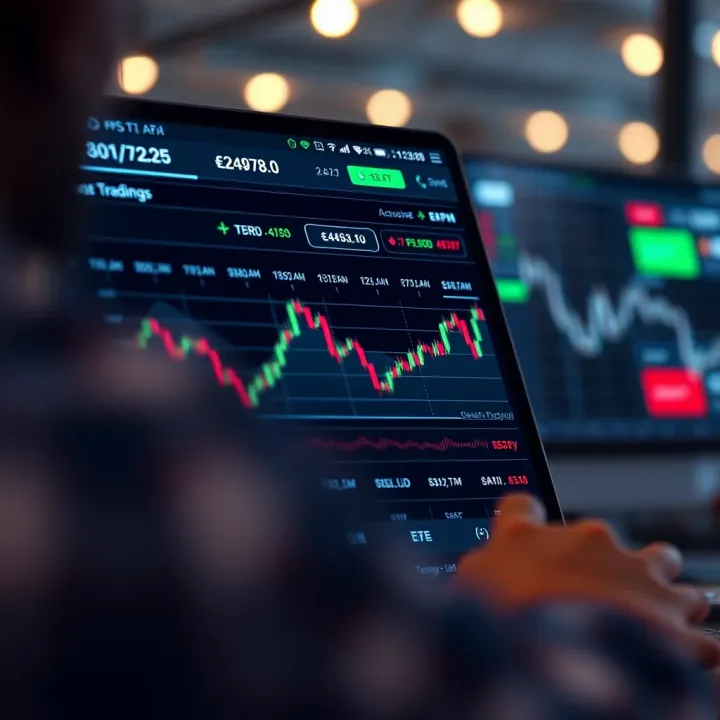
Speed combined with reliability can mean the difference between profit and loss in day trading or short-term investment strategies.
Quick trading apps also come with features like customised watchlists, alerts, and advanced charting tools. These help investors track their portfolios and act swiftly when opportunities arise without being stuck on desktops.
Security is another key concern. Leading apps include robust encryption, two-factor authentication, and compliance with regulations from the Securities and Exchange Board of India (SEBI) to safeguard your transactions and identity.
When picking a quick trading app, investors should consider:
Latency and execution speed
User interface and ease of navigation
Availability of research and advisory support
Cost structure, including brokerage fees and hidden charges
Mobile network compatibility and uptime
Additionally, compatibility with payment modes like UPI and seamless linking to your bank account can streamline fund transfers, reducing delays during transactions.
Understanding how these apps fit individual trading styles and goals is vital. Someone focusing on intraday trade may prioritise lightning-fast order placement; while a long-term investor might value detailed research and portfolio tracking features.
By evaluating these aspects carefully, Indian traders, analysts, advisors, and brokers can select an app that matches their needs, improving their chances of timely and profitable decisions.
In trading, speed isn't just convenience—it's often the difference between profit and loss. A quick trading app helps you capture fleeting market opportunities by delivering real-time data and swift execution. Traders who rely on moment-to-moment decisions need apps that do not lag or freeze, especially during volatile market hours.
Markets can shift within seconds, and timely information is vital. Quick trading apps provide real-time market data, showing exact price movements and volumes as they happen. For example, when the Sensex drops abruptly, an app delivering millisecond updates lets you react instantly, avoiding unnecessary losses. Without this, traders run the risk of acting on outdated data, which can nullify their strategies.
Even if you spot a good trade, slow order execution can mean missed chances or slippage—the difference between expected and actual prices. Efficient trading apps connect directly to exchange servers, processing orders typically within milliseconds. For instance, placing a buy order during sudden market swings requires immediate action; a delay of a few seconds can mean paying a higher price or missing the trade altogether.
Speed also depends on how swiftly you can interact with the app. An interface that feels sluggish or cluttered delays decision-making. A quick trading app offers intuitive navigation with clear buttons and fast loading times. Consider Zerodha Kite’s app: its clean design helps traders execute complex orders without fumbling through confusing menus, saving precious seconds during critical moments.
Active traders often watch intraday price fluctuations or news-triggered moves that last only seconds or minutes. A quick app lets you jump on these chances before others do. For example, a sudden policy announcement can cause sharp volatility. Traders who access real-time updates and execute orders instantly increase their odds of profiting before prices adjust.
Slippage can chop away gains on thin margins. When you place an order late, the price may have moved unfavourably. Faster apps reduce this risk by cutting down communication time with exchanges. This is especially useful when trading high-volume stocks like Reliance Industries or HDFC Bank during peak hours.
Speed helps maintain an advantage over other market participants and algorithmic traders. In an environment crowded with automated systems, delays can put retail traders at a serious disadvantage. Using a quick, reliable app increases your chances to keep pace with institutional players and execute trades on your terms.
Remember, trading speed is not just about technology; it’s also about how seamlessly you can interact with it during high-pressure moments.
In essence, evaluating speed-related features is critical when choosing a trading app. It improves not only your trade execution but also your confidence in navigating a fast-moving market. The right app acts like a trusted ally, helping you respond with agility and precision.
Efficient trading apps offer essential functionalities and tools that empower investors to execute trades swiftly and make informed decisions. Understanding these core features helps traders select an app aligned with their trading style, maximising both speed and accuracy.
Market orders let you buy or sell a stock immediately at the best available price, which is useful when speed matters most. For instance, if a sudden price dip presents a buying opportunity, a market order ensures quick entry without delay. However, this might lead to execution at a less favourable price during volatile periods.
Limit orders, on the other hand, allow you to set a specific price at which you want to buy or sell. Suppose you want to buy a share only if it falls to ₹950; placing a limit order ensures the trade executes only at or below this price, protecting you from paying more. This is handy for traders who prefer control over execution price but can afford to wait.

Stop loss orders help manage risk by automatically closing a position when the price moves unfavourably beyond a set level. This prevents hefty losses, especially during sudden market swings. For example, if you buy shares at ₹1,000 and set a stop loss at ₹950, the app sells automatically if the price hits ₹950.
Target orders lock in profits by selling once a predefined favourable price is reached. Imagine you buy a stock at ₹1,000 setting a target at ₹1,080; the app will execute the sale automatically when the price hits ₹1,080, ensuring gains even if you’re away.
Bracket orders combine a primary order with two opposite-side orders: stop loss and target order. This package helps traders define entry and exit points in a single go. For example, you buy shares and simultaneously set a stop loss to limit losses and a target price for booking profits, reducing the need for constant monitoring.
Cover orders pair a market or limit order with a mandatory stop loss order. Because the risk is pre-defined, exchanges often offer higher leverage on cover orders. This feature suits active traders aiming for quick turnover but wanting some downside protection.
Trading apps provide different chart types like candlestick, line, and bar charts to visualise price movement. Candlestick charts are popular for their detailed information on open, high, low, and close prices over chosen periods. For example, intraday traders often rely on candlestick charts to spot short-term patterns.
Different chart types suit different strategies—line charts are simpler and work well for beginners tracking overall trends. A good trading app offers flexibility in chart selection so traders can adapt to their preference and analysis style.
Technical indicators such as Moving Averages, Relative Strength Index (RSI), and Bollinger Bands help traders assess market conditions beyond price alone. Overlays like Exponential Moving Average (EMA) on charts allow identification of trends and potential reversals.
For instance, RSI helps spot overbought or oversold stocks; traders might decide to buy when RSI indicates oversold levels. Efficient apps let users add multiple indicators and customise parameters, providing deeper insights for informed decisions.
Timely information is crucial in fast-moving markets. Customisable alerts notify traders about price levels, trade executions, or indicator signals, helping them act promptly.
Say you’re tracking a stock expected to breakout at ₹1,200. Setting an alert for this price means you get notified instantly and can place your trade without constantly watching screens. Alerts can also warn about margin calls or significant news updates, keeping traders prepared.
Efficient trading hinges on an app’s ability to combine quick order execution with rich analytical tools. Features like varied order types and customisable alerts help traders manage risks and seize opportunities, while charting and technical indicators enhance market reading skills.
Choosing the right trading app means looking beyond speed alone to these core functionalities, ensuring you have the right tools to trade confidently in India’s dynamic markets.
Security is a major factor when using quick trading apps. When trades happen in seconds, any security lapse can lead to significant financial losses. Hence, understanding how these apps protect your data and transactions is crucial for anyone looking to trade actively and confidently.
Two-Factor Authentication (2FA) is a simple but effective way to add an extra layer of security. When you log in, besides your password, you must enter a one-time code sent to your mobile or email. This method stops unauthorised access even if someone gets hold of your password. Many Indian trading apps like Zerodha Kite and Upstox use 2FA to safeguard accounts, ensuring that only you can initiate trades or access sensitive data.
Encryption Methods are what protect your data as it travels between your device and the broker's servers. This includes all your personal info and trading instructions. Strong encryption, such as SSL (Secure Sockets Layer), makes it difficult for hackers to intercept or tamper with your data. Without such protection, private details could leak, risking identity theft and fraud. So, it helps to confirm that your chosen app follows industry-standard encryption techniques.
Regulatory Compliance ensures the app meets guidelines set by authorities like the Securities and Exchange Board of India (SEBI). These rules cover everything from protecting customer funds to maintaining data privacy. An app compliant with SEBI and Reserve Bank of India (RBI) norms offers more trustworthiness. For example, ensuring your personal KYC (Know Your Customer) documents are handled securely and your transactions are monitored for unusual activity helps to prevent fraud.
Avoiding Impulsive Trades is important when using apps that execute orders quickly. The speed itself can tempt traders to act hastily, leading to losses from rash decisions. To manage this, it’s wise to set predefined strategies or limit orders. This way, your trades happen only under certain conditions, reducing the risk of emotional mistakes during market volatility.
Secure Network Connections are key when placing orders on the move. Using public Wi-Fi or unsecured connections exposes your app to hacking or data leaks. Always trade using secure private networks or VPNs (Virtual Private Networks). Many Indian investors face this risk while trading from cafes or shared spaces, so being cautious about connectivity directly protects your investments.
Regular App Updates keep security features and bug fixes up to date. Trading app providers continuously improve their software to patch vulnerabilities and improve performance. Ignoring updates can leave your app exposed to older threats. Most apps prompt you when an update is ready; installing them promptly supports smooth and safe trading.
In the fast-paced world of quick trading, combining speed with strong security measures shields your investments and helps you trade with peace of mind.
Selecting a quick trading app tailored to the Indian market makes a noticeable difference for investors. The integration with local stock exchanges, payment modes, and regulatory processes ensures faster transactions and better user experience. Besides speed, such apps handle Indian securities, taxes, and compliance norms efficiently, helping traders focus on market opportunities rather than paperwork or technical glitches.
A robust trading app for Indian investors must have seamless connectivity with the National Stock Exchange (NSE) and Bombay Stock Exchange (BSE). These exchanges drive most equity and derivative trades in India, so real-time access to their order books and live market data is critical. This connectivity enables instant order execution, accurate price discovery, and timely updates on market movements.
For example, Zerodha and Upstox provide high-speed access to NSE and BSE, which helps intraday traders capitalise on small price fluctuations. Without this, orders may lag or fail, leading to costly slippage.
Easy fund transfers are vital for quick trading. Unified Payments Interface (UPI) has become the go-to system in India for instant bank transfers without cumbersome details. Trading apps that let you link your bank account through UPI shortcut your payment and withdrawal processes.
This eliminates delays in funding your trading account or receiving profits. For instance, apps like Groww enable instant payment via UPI for stock purchases, saving valuable seconds compared to traditional net banking or NEFT methods. This advantage matters especially during volatile sessions.
Indian regulations require Know Your Customer (KYC) verification before trading. Quick trading apps that offer digital KYC with Aadhaar or PAN-based e-verification remove friction from onboarding. Paperless, app-based KYC means you can open trading accounts within minutes, not days.
A platform like 5paisa uses video KYC to verify users swiftly, allowing investors to start trading the same day. This convenience matters for those wanting to jump on market trends quickly.
Brokerage fees directly impact your trading profitability. Quick trading apps offer transparent brokerage, often charging per trade or as a flat monthly fee. For active traders, low or zero brokerage on equity delivery or intraday trades helps keep costs manageable.
For example, Zerodha charges ₹20 or 0.03% per intraday order (whichever is lower), which is attractive for high-frequency traders. Knowing these fees upfront allows investors to plan trades and budgets better.
Not all trades have the same cost. Intraday trades usually attract lower brokerage but higher risks, while delivery trades (holding stocks) often have a different fee structure. Apps that clearly differentiate these and provide competitive rates make accounting simpler.
ICICI Direct’s app, for instance, provides separate rate cards for intraday and delivery, improving cost visibility. This distinction helps investors choose the trade type suitable for their strategy without surprises.
Aside from basic brokerage, other charges like transaction fees, Securities Transaction Tax (STT), stamp duty, and Goods and Services Tax (GST) affect the overall expense. A good quick trading app discloses all such costs transparently.
Avoiding hidden charges saves money, especially for frequent trading. Apps like Angel Broking list all levy details clearly in billing statements, preventing unpleasant surprises during settlements.
Understanding the interplay between exchange connectivity, payment integration, compliance, and fee structure ensures you pick the right app that fits Indian market realities and your trading style perfectly.
Using quick trading apps well involves more than just having a fast platform. It requires setting up tools so you catch market moves without missed chances, while also managing risks carefully. Traders who customise their workspace and track their strategies clearly tend to make smarter decisions quickly. At the same time, keeping an eye on risk limits helps avoid costly slip-ups when trading fast.
One of the simplest yet powerful ways to stay on top in quick trading apps is by personalising your watchlist. Rather than cluttering your screen with thousands of stocks, you pick a handful of shares, indices, or commodities that fit your trading plan. For example, if you trade Indian IT stocks, adding Infosys, TCS, and Wipro helps you get instant updates on the movers you actually care about. This saves time and reduces noise.
Setting notification alerts for price changes, volume spikes, or technical signals ensures you don’t miss crucial market signals. Say Reliance Industries hits a target price you are tracking; receiving an immediate ping on your mobile can give you the edge to act fast, completing a trade before prices shift again. Just ensure you configure alerts to balance catching opportunities without being overwhelmed by constant alarms.
Quick apps often support saving customised strategies based on indicators, order types, or specific conditions. For instance, you might set a strategy to buy when Nifty crosses its 50-day moving average combined with a volume surge. Saving these rules saves time and avoids manual errors. Plus, it helps you stick to tested methods rather than making impulsive calls in a hurry.
A stop loss order automatically sells a stock when its price hits a specified limit, capping your potential loss. This tool is essential when trading fast because market moves can be sudden, and you may not have time to intervene manually. For example, if you buy Tata Motors at ₹450, placing a stop loss at ₹435 helps contain losses if the price dives unexpectedly.
Trading on margin means borrowing funds to increase your buying power, but this amplifies risks too. Quick traders should regularly check their margin utilisation to avoid margin calls, where the broker demands additional funds or liquidates assets. Ignoring this can force sudden exits at unfavourable prices, wiping out profits or increasing losses.
Fast trading apps tempt you to trade frequently, but overtrading drains your capital through commissions and increases error chances. Set trade limits for the day and stick to them. For example, deciding to place no more than 10 trades per session helps maintain focus and discipline. Taking breaks and reviewing performance periodically also prevents emotional decisions.
Quick trading is as much about managing risks and workspace as it is about speed itself. Proper dashboard setup and clear risk controls help ensure that fast decisions do not lead to costly mistakes.
These practical tips improve trading efficiency and protect your capital when using quick trading apps in India’s dynamic market.
📱 Discover how to pick the right trading app in India by exploring key features, security tips, top platforms, and practical advice for both new and seasoned traders.

Explore top ₹10 trading apps for Indian investors 🇮🇳, compare features, brokerage, usability & security to start investing with small capital confidently 📈
Find the best binary trading app with features suited for Indian traders like security, user experience, and platform reliability. Trade wisely with practical tips 📱💹
📱 Find the best easy trading app for Indian investors! Learn about features, security, usability & top options for stocks, mutual funds & more with confidence.
Based on 14 reviews